Before you go on
This site uses only what it needs to work: the language you choose, access to the members' area, and anonymous counts that tell us whether the search is answering well. For advertising campaigns we ask your permission, and without a yes nothing starts. See the full list.

Frosolone preserves a centuries-old tradition of forging knives, scissors and cutting tools, rooted in sixth-century Lombard heritage and still alive in its local workshops.
Frosolone sits in the Alto Molise, at roughly nine hundred metres above sea level, in the province of Isernia — a medieval hill town partly damaged by the 1805 earthquake, whose epicentre fell in this very area, though its original urban fabric was never erased. Along the narrow lanes climbing the ridge, the stone tells centuries of geographic isolation and, at the same time, of a productive specialisation that made this small centre known well beyond the region's borders.
The tradition of forging cutting tools is traced back to the Lombard settlement of the sixth century: the Lombards brought metallurgical techniques that found favourable conditions in the Molise hinterland, with timber available for the forges and a material culture oriented toward tools for work and for war. Over the following centuries, the workshops of Frosolone refined the production of knives, daggers and scissors, developing knowledge passed down in a direct line — from father to son, from master to apprentice — that was never mere repetition, but incorporated gradual technical adjustments, adapting to market demand and to the quality of available materials.
Recognition of this heritage has taken institutional form in the Museo dei Ferri Taglienti (Museum of Cutting Tools), housed in the town's historic centre. The collection brings together hundreds of pieces of historical value — knives, scissors, blades of varied origin and function, including military instruments — recovered from collectors and from the descendants of artisan families active throughout the twentieth century. The museum, recently renovated, documents not only the form of the objects but also the production processes, conveying the measure of a craft that demanded physical precision, knowledge of metal, and the ability to judge the quality of steel by eye and by touch.
Today a handful of workshops continue to work according to methods that preserve the artisanal logic of production — piece by piece, with close attention to finishing and to the balance of the blade — even as they contend with a changed market and the pressure of industrial production. Frosolone remains one of the few cases in inland Italy where a defining craft has survived not merely as museum memory but retains an active presence in the territory, with artisans who still forge, sharpen and finish cutting tools in the very place where this practice took shape fifteen centuries ago.
Skeejay Derivative work: Nicholas Gemini · CC0 — Wikimedia Commons
Certified Made in Italy businesses close to this place.
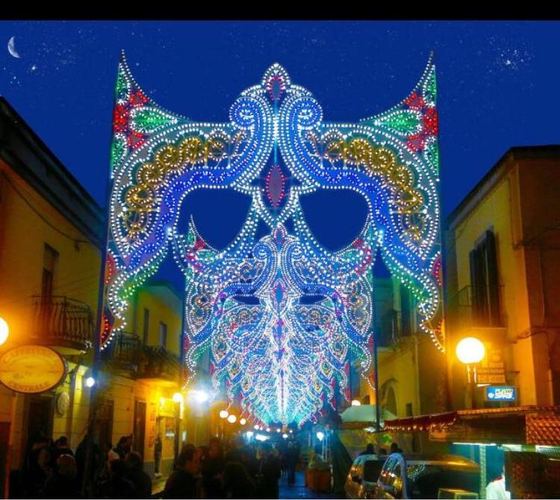
VENDITTI LUMINARIE Srl
Carpinone (IS) · 10.1 km
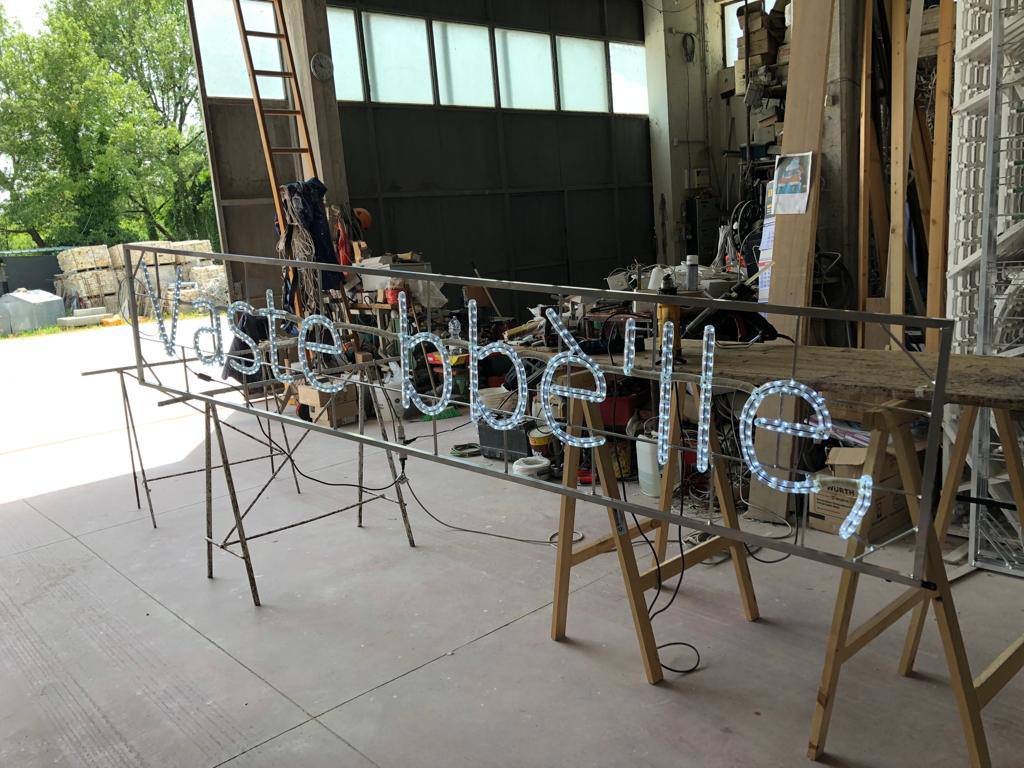
Luminarie De Vincenzi
Pesche (IS) · about 14 km
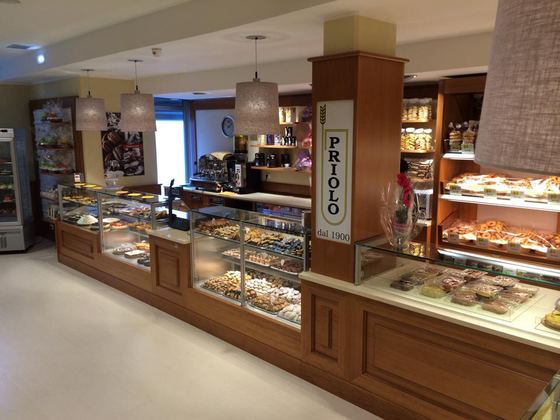
PANIFICIO - PRIOLO NINO - DAL 1900
Bojano (CB) · 14.2 km

BOCA - LATTE+
San Polo Matese (CB) · about 17 km
Casa Funeraria La Fraterna
Isernia (IS) · 18.9 km
FIOR DI LOTO ESTETICA E BENESSERE
Isernia (IS) · 18.9 km