Before you go on
This site uses only what it needs to work: the language you choose, access to the members' area, and anonymous counts that tell us whether the search is answering well. For advertising campaigns we ask your permission, and without a yes nothing starts. See the full list.

A small village of around 250 inhabitants in the Planargia, Tinnura is entirely decorated with murals depicting Sardinian rural life, ancient trades and traditional masks. The works extend along the main streets and squares, turning the village into an open-air museum.
In the Planargia, a historic region in west-central Sardinia, the municipality of Tinnura has just over 250 inhabitants and occupies a secluded position among the hills sloping down toward the Tirso and Temo rivers. The village is similar in size to many settlements in Sardinia's interior, marked by decades of emigration and a population that has thinned steadily over time. Yet Tinnura has built around this condition a precise, visible and lasting response: mural painting as a form of organised memory.
The house façades along the main street and in the village squares hold a concentration of murals that document Sardinian agropastoral civilisation with an almost ethnographic attentiveness. The scenes depict trades that have disappeared or are dying out — weaving, bread-making, sheep-shearing — alongside the masks of traditional carnival and the seasonal rites that once marked the calendar of the rural inland communities. This is not decoration in the ornamental sense: each painted panel fixes a gesture, a tool, a garment, a face that would otherwise survive only in the oral memory of the older generations.
The trail also extends through sculptures and installations that complement the paintings, turning the entire village into a continuous exhibition space, with no thresholds and no tickets. Walking through Tinnura means moving among works that were not conceived for a museum, but for the wall of one's own house, for the surface seen from the kitchen window. This coincidence between the place of art and the place of dwelling is what sets Tinnura apart from many other Italian villages that have adopted street art as a tool for tourist revival.
The Planargia is a territory that experienced intense migratory flows in the second half of the twentieth century, and Tinnura still bears the marks of this in its demographic structure. In this sense, the murals are not merely a figurative archive: they are also a declaration of belonging, a way for a community to name itself before others do so on its behalf. Public art, here, did not arrive from outside as a project imposed on a struggling village, but has roots in the residents' will to preserve a form of collective identity through images.
Giamas · CC BY-SA 3.0 — Wikimedia Commons
Certified Made in Italy businesses close to this place.
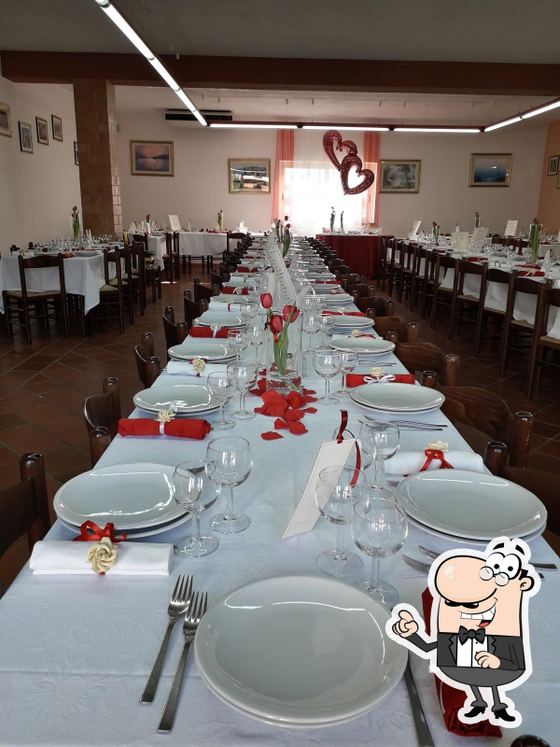
RISTORANTE OK CORRAL
Abbasanta (OR) · 26.9 km
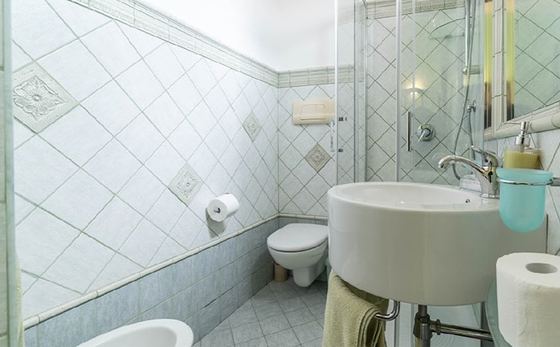
B&B Rita e Renzo - Affittacamere
Riola Sardo (OR) · 30.4 km
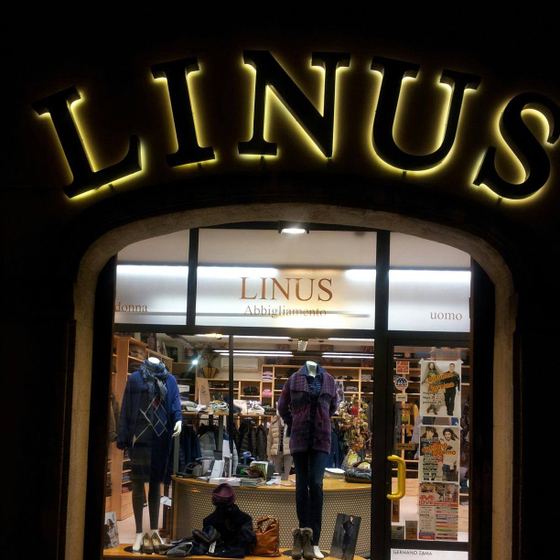
Linus Abbigliamento
Thiesi (SS) · 31.8 km
O.F. RUMPURA Srl
Alghero (SS) · 37.1 km
Ristorante Mabrouk
Alghero (SS) · 37.9 km
Dusty Services Engineering Srl
Bolotana (NU) · 38 km