Before you go on
This site uses only what it needs to work: the language you choose, access to the members' area, and anonymous counts that tell us whether the search is answering well. For advertising campaigns we ask your permission, and without a yes nothing starts. See the full list.

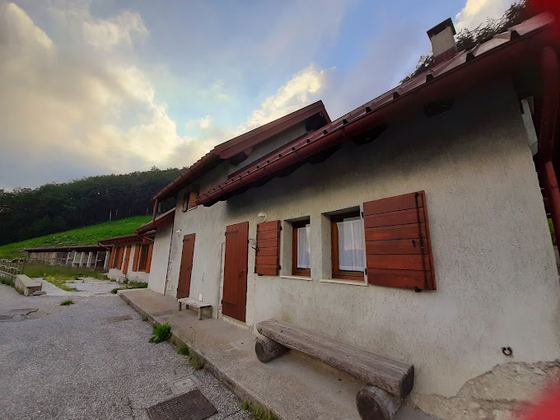
Small mountain village in Carnia of medieval Germanic origin, keeper of artisan traditions and of an Alpine culture that remained isolated for centuries. Its identity is expressed in local craftsmanship in wood, wrought iron, straw and wax.
Sauris exists in two fragments: Sauris di Sotto and Sauris di Sopra, separated by only a few kilometres of road and by a difference in altitude that alters the landscape with discretion. The municipality lies in Carnia, in the province of Udine, between one thousand and one thousand four hundred metres above sea level — the highest in the entire Friuli-Venezia Giulia region. Reaching it means passing through a tunnel cut into the rock, a passage that for a long time was the only practicable way through to the outside world, and which still today physically marks the boundary between the ordinary world and this plateau closed in on itself.
The founding of the village dates back to the 13th century, when groups of German speakers from the northern Alpine area settled in the valley. Geographic isolation did the rest: over the course of eight centuries the language brought by the settlers did not dissolve into the surrounding Friulian, but was preserved in a form of its own, Saurano — *Zahrar*, in the local name — an archaic Upper German dialect that still carries traces of medieval phonetics and that part of the community continues to use in daily life. Sauris is recognised as a Germanic linguistic island, one of the few to have survived in the Italian Alpine arc.
The traditions the village preserves are not limited to language. The Carnevale di Sauris (Sauris Carnival) has a precise and documented ritual form: the *Rölar*, figures covered in soot and fitted with loud cowbells, and the *Kheirar*, armed with a large broom, move through the streets of the village following a codified sequence that belongs not to the register of improvised festivity but to that of collective rite, with symbolic functions tied to the seasonal cycle. It is one of those expressions of Alpine folklore in which outward form and underlying meaning have remained in a recognisable relationship.
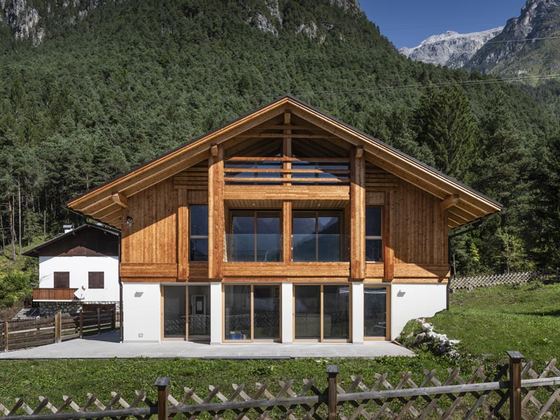
Local craftsmanship — carved wood objects, wrought iron work, straw weaving, wax working — reflects a manufacture handed down through generations by the same logic of oral transmission that kept the dialect alive. This is not production for the tourist market in its more recent sense, but practices that for centuries served a concrete practical function within the community. Wood, in particular, was both raw material and formal language at once, in a territory where the forest was a primary resource and the ability to work it partly determined the quality of domestic life.
In 2022 the World Tourism Organization of the United Nations included Sauris among the *Best Tourism Villages*, a recognition given to rural settlements that have preserved cultural and landscape values in a manner coherent with their own identity. This is useful not so much as a certificate of quality but as an indicator of a rare condition: a village that has passed through modernity without losing the legibility of its own history, in a balance owed more to prolonged isolation than to deliberate conservation policies.
Johann Jaritz · CC BY-SA 3.0 — Wikimedia Commons
Certified Made in Italy businesses close to this place.