
Abandoned village of the Calabrian hinterland, one of the silent, forgotten places scattered across the Aspromonte. Its state of abandonment makes it a place for contemplation and reflection on the passing of time.
In the Aspromonte hinterland, along the gorges carved by the Amendolea torrent, Roghudi Vecchio occupies a position that seems to defy the logic of ordinary human settlement: the village stands at about 500 metres above sea level, in the very bed of the great fiumara (seasonal river), surrounded by rock walls that for centuries defined both its protection and its vulnerability. The place name probably derives from the ancient Greek *Rochùdios*, meaning cliff or crag — a root that already says everything about the nature of the place and the character of those who chose to live there.
The history of Roghudi is inseparable from water. The village belongs to the area of Calabria Grecanica, that southern stretch of the Aspromonte where traces of Greek-Calabrian, the *grecanico* dialect descended from the ancient Greek brought by the colonists of Magna Grecia, survived until the twentieth century. In 1971 the resident population numbered around 1,650 people. That year, over the course of two days, the area received as much rain as it would normally see in a whole year. The flood cut the village off, caused deaths and left people missing, and made numerous homes unfit for habitation. On 16 February 1971, the mayor Angelo Romeo signed the evacuation order. Most of the inhabitants moved to what is now Roghudi Nuovo, a settlement built on land granted by the municipality of Melito Porto Salvo, with no historical continuity with the place of origin. Some elderly residents held on for years, but further flooding through the decade made the abandonment final.
What remains is a village standing still. The stone houses still open onto recognisable alleys, the thresholds retain their shape, and here and there a wall still bears the weight of the years with a certain stubbornness. Vegetation advances without haste, filling courtyards and rooms, redrawing the boundaries between what was built and what is wild. The silence is not empty: it is the sum of everything that is no longer there — the voices, the footsteps, the smoke from the chimneys, the sound of the wooden moulds once used by carvers to shape the local cheese, a production that still survives today in the nearby hamlet of Chorio, the only one still inhabited within the municipal territory.
Roghudi Vecchio can today be reached on foot along the trails of the Aspromonte National Park, of which the area is part. The route demands care and a certain familiarity with Aspromonte terrain: the fiumara must be crossed, and the path follows contour lines that shift perspective at every turn. Those who arrive find themselves before a village that has been neither restored nor turned into a museum, and this condition — precarious as it is — is also what sets it apart from many other recovered places returned to some new function. Here time has not been interrupted: it continues, slowly, to do its work.
Giuseppe De Marte at Italian Wikipedia · CC BY-SA 3.0 — Wikimedia Commons
Certified Made in Italy businesses close to this place.

RISTORANTE BRACERIA PIZZERIA VILLEGGIANTE DA CICCINO
Reggio di Calabria (RC) · 23.2 km
PRODOTTI TIPICI CALABRESI DI GIORDANO CARMELA
Reggio Calabria (RC) · 23.9 km
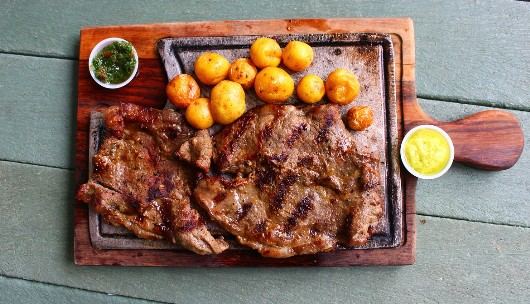
GASTRONOMIA DEL CARMINE
Reggio Calabria (RC) · 24.8 km

ZANZIBAR BAR - GELATERIA
Scilla (RC) · 28.8 km

Fisioing Lab -Servizi Di Fisioterapia E Riabilitazione
Palmi (RC) · 34.5 km
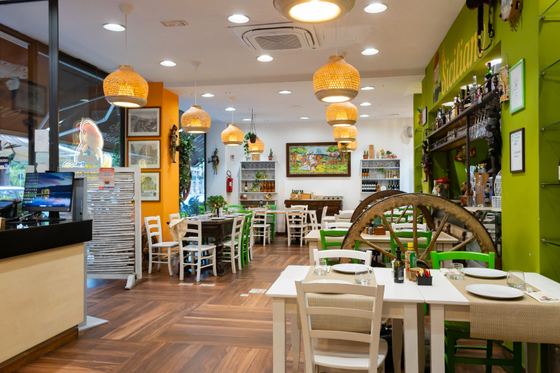
Il Siciliano
Messina (ME) · 35.2 km
