Before you go on
This site uses only what it needs to work: the language you choose, access to the members' area, and anonymous counts that tell us whether the search is answering well. For advertising campaigns we ask your permission, and without a yes nothing starts. See the full list.

An eccentric nineteenth-century residence built by Count Cesare Mattei in the hills near Bologna, a visionary synthesis of medieval, Arab and Renaissance architectural styles. Long abandoned, it has since been restored and reopened to the public.
In the hills of the Bolognese Apennines, in the municipality of Grizzana Morandi, stands a structure that belongs to no established architectural category. Rocchetta Mattei was conceived starting in 1850 by Count Cesare Mattei — physician, homeopath, a prominent and controversial figure of nineteenth-century positivism — as both a private residence and a manifesto of a worldview. Mattei did not commission a formal palace or a country villa: he wanted something that did not yet exist, and that probably could not have existed anywhere else.
The building that took shape over the following decades blends, with an internal coherence of its own, elements that architectural theory would tend to keep apart. Crenellated towers recalling the medieval period stand alongside courtyards in Moorish taste, with horseshoe arches and stucco decorations echoing the Alhambra in Granada; chapels with Gothic layouts coexist with rooms in which Art Nouveau seems to anticipate itself. The result is not disorder, but a system consistent with the logic of its creator: Mattei was convinced that beauty, like health, derived from the balance between different forces. Rocchetta Mattei was, in this sense, also a therapeutic metaphor.
After the count's death in 1896, the property changed hands several times, before entering a long period of neglect that lasted for much of the twentieth century. Decades of disrepair left deep marks on the structure: partial collapses, water infiltration, and deterioration of the stuccoes and decorated surfaces. Rocchetta Mattei remained in this condition until the Fondazione Cassa di Risparmio di Bologna — today Fondazione Carisbo — began a restoration effort carried out in several phases, gradually returning the rooms to public visits. The work, which first addressed the medieval and Renaissance sections and more recently the Arab-Moorish wing, is still ongoing in some parts of the building.
What the restoration has brought back to light is a layered interior, in which each room tells a phase of the construction and a nuance of its patron's thinking. The octagonal chapel, with its perforated dome that filters light in a calibrated way, is perhaps the space where the original intention can be read most clearly. Elsewhere, frescoes and ceramic finishes document the variety of craftsmen involved and the circulation of figurative models that moved across late nineteenth-century Europe without regard for boundaries of style or nation.
The surrounding landscape helps define the character of the place. Rocchetta Mattei rises on a spur overlooking the Reno valley, in a position Mattei chose with deliberate scenographic intent: the structure was meant to be visible from afar, and at the same time to look far into the distance. Today, with access regulated by booking, a visit retains an intimate quality that allows one to read the building without the distraction of crowds — a condition rarely found in places of this historical complexity.
Rapallo80 · CC BY-SA 4.0 — Wikimedia Commons
Certified Made in Italy businesses close to this place.
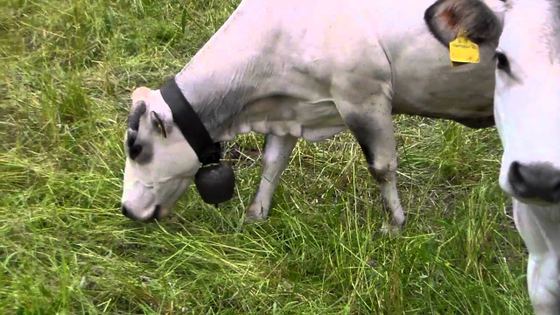
CENTRO CARNI VALERIO
Porretta Terme di Altoreno Terme (BO) · 18.2 km
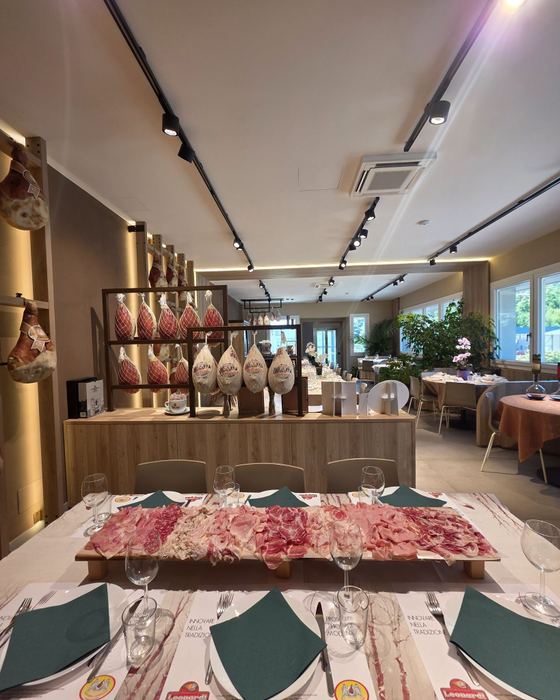
Salumi Leonardi & Ciardullo
Marano sul Panaro (MO) · 27.6 km

LA CARNERIA MAROTTA NICOLA
Valsamoggia (BO) · 28.1 km
PARRUCCHIERI AMSTERDAM DI EN NABAOUI RACHID
Bologna (BO) · 29.8 km
Pescheria Marco E Matteo
Bologna (BO) · 29.9 km
Ricevimenti La Vecchia Quercia
Serramazzoni (MO) · 30.2 km