
The island of Ischia is home to one of the most significant concentrations of natural thermal parks in the Mediterranean, fed by volcanic springs that define its subsoil.
The island of Ischia sits atop an active volcanic system that runs beneath its entire territory: some 46 square kilometres of porous rock crossed by more than a hundred thermal springs, each with its own temperature, chemical composition and properties. This is not a localised phenomenon but a widespread presence that has shaped the island's geography and culture more profoundly than any other natural feature.
The use of these waters dates back to the first Euboean settlers who arrived on the island in the 8th century BC, at the site then known as Pithecusa. Archaeological finds housed at the Museo Archeologico di Villa Arbusto (Archaeological Museum) in Lacco Ameno document how those early communities already knew of and used the springs for therapeutic purposes. Romans, Aragonese and later the Bourbons all reinforced this practice in the centuries that followed, each leaving traces of a tradition that does not belong to modern tourism but predates it by millennia. The treatise De' rimedi naturali che sono nell'isola di Pithecusa hoggi detta Ischia (On the Natural Remedies Found on the Island of Pithecusa, Now Called Ischia), published in 1588 and accompanied by a map engraved by Mario Cartaro in 1586, stands as one of the earliest written systematisations of this medical and territorial tradition.
The thermal parks that today occupy various parts of the island — spread across the towns of Ischia, Casamicciola Terme, Lacco Ameno, Forio, Serrara Fontana and Barano — organise these springs into pools at differing temperatures, often arranged on terraces that descend toward the sea. The waters emerge at temperatures that can exceed seventy degrees and are cooled or blended to reach levels suitable for bathing. Each spring has its own composition: some are rich in radon, others in bicarbonates, chlorides or sulphates, and this variety determines different therapeutic uses, from treating musculoskeletal conditions to dermatological care.
What sets the thermal tradition of Ischia apart from other Italian contexts is the continuity between the natural landscape and the restorative practice. The pools are not enclosed or artificial spaces, but open onto views that take in Monte Epomeo — the volcanic peak that rises 789 metres above the island — along with pine forests, vineyards and the Bay of Naples. Bathing in these waters means placing oneself physically within a geological system that is still alive, in a relationship with the land that remains direct and tangible.
Dr.Conati at Italian Wikipedia · Public domain — Wikimedia Commons
Certified Made in Italy businesses close to this place.
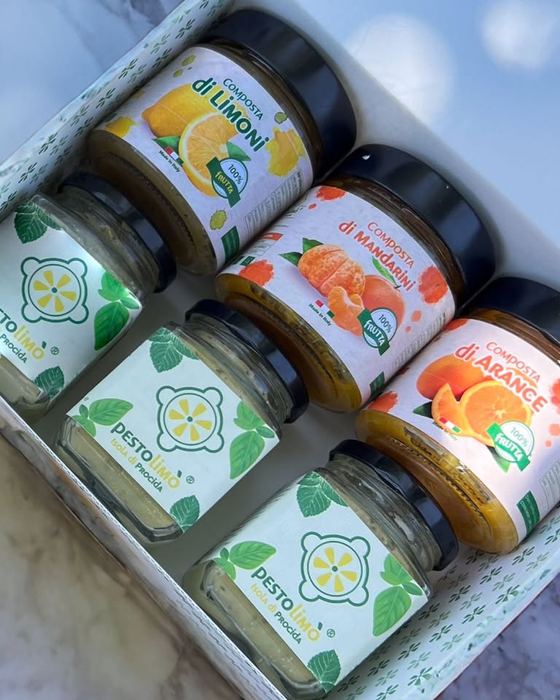
Pestolimò - Isola di Procida
Procida (NA) · 5.8 km
Vanity - Beauty & SpA
Procida (NA) · 6.4 km
I DOLCI DI CAREDDA ENRICO
Ischia (NA) · 6.8 km
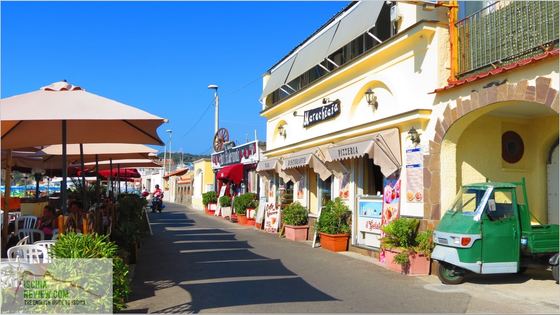
RISTORANTE PIZZERIA MARECHIAIA
Forio (NA) · 7 km
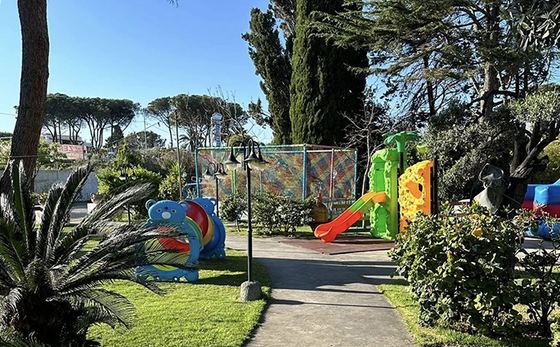
BAR PIZZERIA PARCO GIOCHI DELLA SPERANZA
Forio (NA) · 7.1 km

Trasporti funebri Barca - Eccellente collaboratore da oltre 30 anni SERGIO TURAZZO
Monte di Procida (NA) · 11.5 km
