
Ancient Apennine hospice on the border between Emilia and Tuscany, a resting place for medieval pilgrims along mountain transit routes, today home to a small ethnographic museum.
On the Apennine ridge that divides Emilia-Romagna from Tuscany, at 1,525 metres above sea level, stands San Pellegrino in Alpe: a settlement of a few dozen inhabitants that for centuries represented one of the most frequented nodes in the entire medieval Apennine road network. The Passo delle Radici, which reaches its highest point here, was crossed by travellers making their way along the via Bibulca, one of the branches of the Francigena that connected the Po Valley to Lucca and, beyond, to Rome. The ospizio (hospice) guarding this pass is reliably documented from 1110, though its origins likely date to around 1071, the year Beatrice of Lorraine — mother of Matilda of Canossa — founded the Benedictine abbey of Frassinoro a few kilometres downhill. San Pellegrino was an integral part of the system of control, hospitality and communication that the Canossa family had built across these territories.
The original structure offered travellers food, fire and a bed for three days: a regulated institution of hospitality, not a mere makeshift stopover. The climate of the ridge made passage dangerous for much of the year — historical estimates suggest up to eight months of snow — and the presence of an organised shelter was a necessary condition for the survival of transit across the pass. Around the ospizio, a small settlement gradually took shape, administratively divided between the provinces of Modena and Lucca: a split that still today defines the place's unusual status, suspended between two regions and two distinct Apennine cultures.
The sanctuary dedicated to Saints Pellegrino and Bianco preserves a remarkably tenacious local hagiographic tradition. According to the legend handed down among the communities of the area, the two saints confronted the devil on the ridge in a physical battle, and the blow struck by San Pellegrino was so forceful that it spun the demon around three times. This narrative has left its mark on the local toponymy: the so-called Sassi del Diavolo (Devil's Stones), rock formations along the path known as the Giro del Diavolo, are still pointed to today as the stage of that encounter. The legend belongs to that vein of storytelling in which the sacred and the physical landscape overlap until they become indistinguishable, and in which the mountain itself becomes the record of a history that found no other means of transmission.
The ethnographic museum housed in the ancient structure gathers objects from the peasant and pastoral life of the Modena and Garfagnana Apennines: farming implements, household tools, material evidence of a subsistence economy that inhabited these slopes for centuries. The collection makes no claim to encyclopaedic completeness, but it conveys the concrete measure of an existence organised around snow, woodland and seasonal grazing. It is in this sense that the Ospizio di San Pellegrino in Alpe continues to serve, in a different form, the function it held in the Middle Ages: offering a point of rest and orientation to those crossing the ridge.
Giorgio Galeotti · CC BY 4.0 — Wikimedia Commons
Certified Made in Italy businesses close to this place.
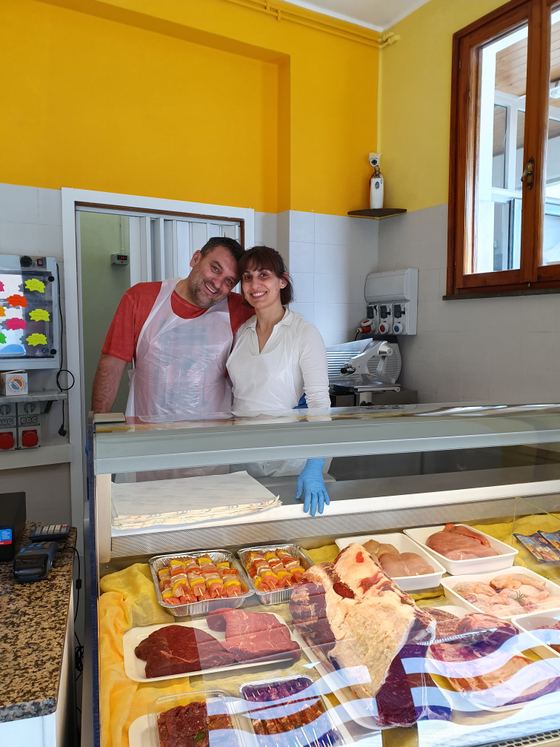
Macelleria Ugoletti Oscar
Valestra (RE) · 17.7 km
RISTORANTE PIZZERIA ALMA - SPECIALITA' PESCE GOURMET & PIZZA
Carpineti (RE) · 17.8 km
Ricevimenti La Vecchia Quercia
Serramazzoni (MO) · 24.6 km
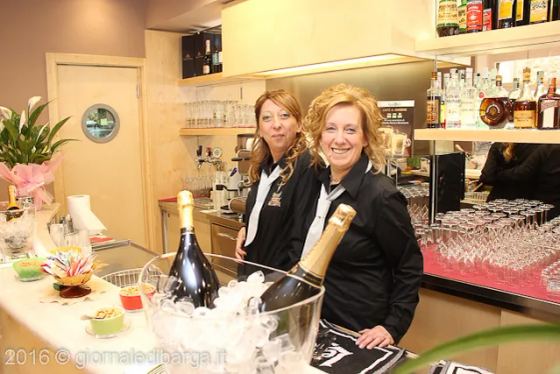
L'ANGOLO DEL CAFFE'
Ponte Allania Barga (LU) · 29.1 km
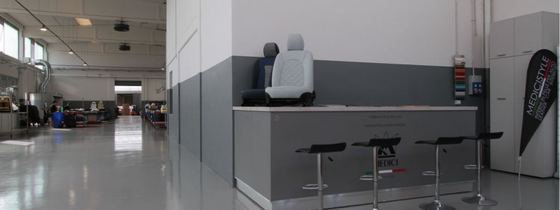
MEDICI STYLE - ATELIER
Vezzano Sul Crostolo (RE) · 35 km
CENTRO CARNI VALERIO
Porretta Terme di Altoreno Terme (BO) · 35.7 km
