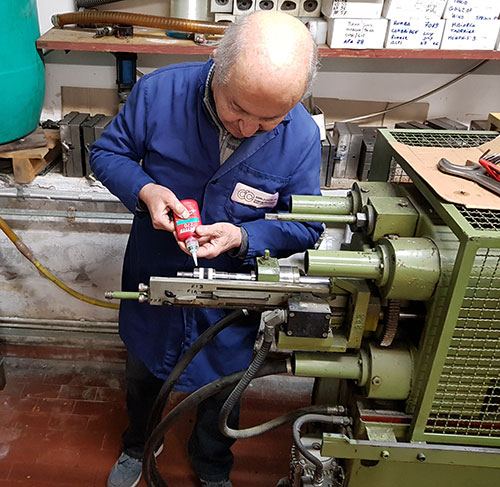
In the Val Pesarina, in Carnia, a clockmaking tradition documented since the seventeenth century: from early clocks in wood and wrought iron to the fine bell-tower clocks built from the eighteenth century onward.
In the innermost reaches of Carnia, along the valley cut by the Pesarina stream, a small system of villages has developed over the centuries a relationship with time that goes beyond metaphor. Prato Carnico and the hamlet of Pesariis preserve a clockmaking tradition documented since the late seventeenth century, born in a mountain setting where the measurement of hours had direct implications for agricultural rhythms, liturgies, and community life. The earliest artefacts were built in wood and wrought iron, with mechanical solutions that reflected both the local availability of materials and the ingenuity of craftsmen who had no access to the great workshops of Europe.
The qualitative leap came in the eighteenth century, when the tradition turned toward the construction of bell-tower and clock-tower mechanisms, artefacts of architectural scale that demanded engineering skill as much as craftsmanship. It is in this context that the company Fratelli Solari was founded in 1725, a name that would carry the valley's reputation well beyond the region's borders. The renown gained in building mechanisms for civic and religious towers turned Pesariis into a recognised point of reference across northern Italy, at a time when technical knowledge circulated through itinerant craftsmen and ecclesiastical commissions.
Today that layered history can still be read directly in the village of Pesariis through the Percorso dell'Orologeria monumentale (Monumental Clockmaking Trail), an open-air museum that runs alongside the Museo dell'Orologeria pesarina (Museum of Pesarina Clockmaking). The trail displays examples built to represent different ways of measuring time: the turbine water clock, the tilting-vessel water clock, the planetary clock, the nocturnal planisphere clock, the giant perpetual calendar. These are not didactic reproductions but working machines, rigorously engineered, that give public and permanent form to the technical culture accumulated in this valley over three centuries.
What sets the Val Pesarina apart from other surviving cases of local craftsmanship is the unbroken continuity between productive practice and the memory of the trade. The valley has preserved not only objects but the living understanding of the mechanisms themselves — the capacity to build, not merely to display. In an alpine territory that has known depopulation and profound economic change, this persistence has a precise material substance, measurable in the gears still turning along the streets of the village.
Ximonic (Simo Räsänen) · CC BY-SA 4.0 — Wikimedia Commons
Certified Made in Italy businesses close to this place.