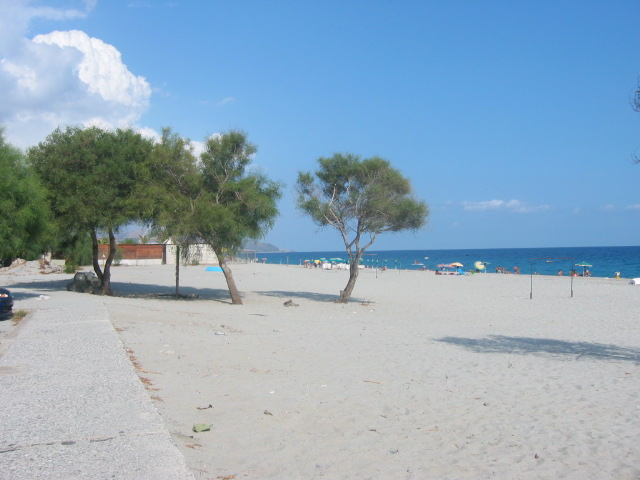
A small village in the hinterland of Reggio Calabria, the last outpost of Calabria's Greek-speaking culture, where traces of Greek-Byzantine heritage survive alongside a fountain tied to traditional courtship rites.
In the hinterland of the province of Reggio Calabria, a few kilometres from the Aspromonte massif and the municipality of Condofuri, Gallicianò occupies a secluded position among the ravines and woods of the Bovesia. The territory takes its name from this same geographical area — the Grecìa Calabra, or Bovesia — which for centuries has preserved a linguistic and cultural continuity of Greek-Byzantine origin, one that survived the historical transformations of southern Calabria. Gallicianò is today considered the last village where the Griko language (Grecanico, a Greek dialect of southern Italy), derived from ancient Greek as filtered through the medieval Byzantine presence, remains a living tongue among part of the population.
Grecanico is neither a dialect of modern Greek nor a recent borrowing: it is a stratification built up over a thousand years, dating back to Magna Graecia and later consolidated during the Middle Ages by successive waves of monks and populations of Hellenic culture. In the Bovesia area, which includes a handful of towns among them Bova, Roghudi and Condofuri, this speech has resisted longer than elsewhere. In Gallicianò that resistance has been especially tenacious, to the point that the village has become a reference point for scholars of ethnolinguistics and for those working on linguistic minorities protected under Italian law — Law 482 of 1999 formally recognises the Grecanico linguistic minority among the country's historic minorities.
At the centre of the village's communal life stood, until not so long ago, a spring whose waters the inhabitants called the fountain of love. This was no ornamental name: the fountain was the place where, by long-standing custom, the young people of the village would meet and courtships would take public shape. In a small, closed community such as that of a mountain village, the space around the spring served a precise social function — it regulated the visibility of relationships between families, marked the stages of courtship, and made recognisable, and therefore legitimate, what would otherwise have remained unseen. The spring water, a primary resource in such a rugged territory, thus also became the symbolic centre of the community's social reproduction.
Gallicianò lies within the Aspromonte National Park, which places the village within a framework of environmental protection covering one of the most complex massifs of southern Italy. The surrounding landscape — deep ravines, Mediterranean and mountain vegetation, paths descending toward the Ionian coast — forms the physical setting in which this cultural survival has unfolded over the centuries. The geographical marginality that historically made access difficult and depopulation all but inevitable is the very condition that preserved what elsewhere has been lost.
Autore sconosciuto · CC BY-SA 3.0 — Wikimedia Commons
Certified Made in Italy businesses close to this place.

RISTORANTE BRACERIA PIZZERIA VILLEGGIANTE DA CICCINO
Reggio di Calabria (RC) · 20.8 km
PRODOTTI TIPICI CALABRESI DI GIORDANO CARMELA
Reggio Calabria (RC) · 21.7 km
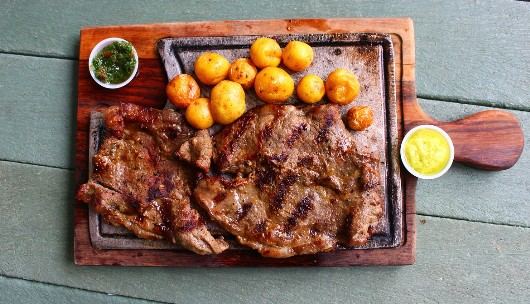
GASTRONOMIA DEL CARMINE
Reggio Calabria (RC) · 21.9 km
ZANZIBAR BAR - GELATERIA
Scilla (RC) · 30.4 km
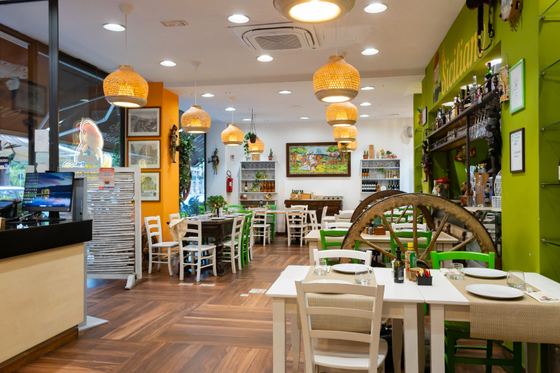
Il Siciliano
Messina (ME) · 33.5 km
Fisioing Lab -Servizi Di Fisioterapia E Riabilitazione
Palmi (RC) · 38.9 km
