
A medieval stronghold perched on a rocky spur in the Romagna hinterland, known for having held the Count of Cagliostro prisoner, an emblematic figure of eighteenth-century esotericism. The village below preserves an almost intact medieval urban layout.
The limestone spur on which San Leo stands breaks away from the Valmarecchia with a verticality that admits no gradation: the rock faces drop almost sheer for dozens of metres, and the fort crowning them seems less built than grown from the stone itself. We are in the Romagna hinterland, a few kilometres from the border with the Marche, in a valley the Marecchia river follows slowly toward the Adriatic. The position determined the history of the place even before history left its mark there: whoever controlled that stronghold controlled passage between the Po Valley and the peninsula.
The fort's current structure is largely the result of the late fifteenth century. The Montefeltro, lords of Urbino, entrusted the transformation of the stronghold to Francesco di Giorgio Martini, the Sienese architect and treatise writer who in those years was redesigning Italian military architecture in response to the advent of artillery. At San Leo one can read the traits of that era: low, massive bastions, corners rounded off to deflect projectiles, a design that favours resilience over height. The fort later passed to the Papal States, which turned it into a state prison, a function it would retain for centuries.
The name of Giuseppe Balsamo — better known to the world as the Count of Cagliostro — is bound to San Leo with an intensity no other prisoner has matched in the collective imagination. Born in Palermo in 1743, Balsamo had crossed eighteenth-century Europe as adventurer, healer, freemason and alchemist, gathering fame and trials in almost equal measure. Sentenced by the tribunal of the Roman Inquisition in 1791, he was confined in the fort of San Leo, where he died in 1795. The cell where he spent his final years — built so that he could see neither the sky nor the village below — can still be visited. His figure has crossed European literature and theatre: Goethe encountered him indirectly through his wife, and Dumas made him a character in his historical novels.
The village at the foot of the stronghold preserves a medieval layout that the centuries have not substantially altered. The Pieve di Santa Maria Assunta (parish church), a pre-Romanesque construction dating from the 8th–9th century with later stratifications, and the cathedral dedicated to San Leone — the bishop of Dalmatian origin who, according to tradition, evangelised the area in the 4th century — form a religious nucleus of rare coherence. San Leone is also the place where, according to hagiographic tradition, the future San Marino withdrew before founding the community on Monte Titano: a continuity of memory running through the centuries without interruption.
What distinguishes San Leo from other fortified sites of the central-northern Apennines is a stratification legible without excessive mediation: geology, Renaissance military architecture, ecclesiastical history and prison history overlap on a relatively contained surface, leaving the visitor to decide which layer of reading to favour. The Valmarecchia, with its badlands and hills, remains one of the least travelled geographic corridors of central Italy, and San Leo occupies its point of greatest visual and historical tension.
Gianni Careddu · CC BY-SA 4.0 — Wikimedia Commons
Certified Made in Italy businesses close to this place.
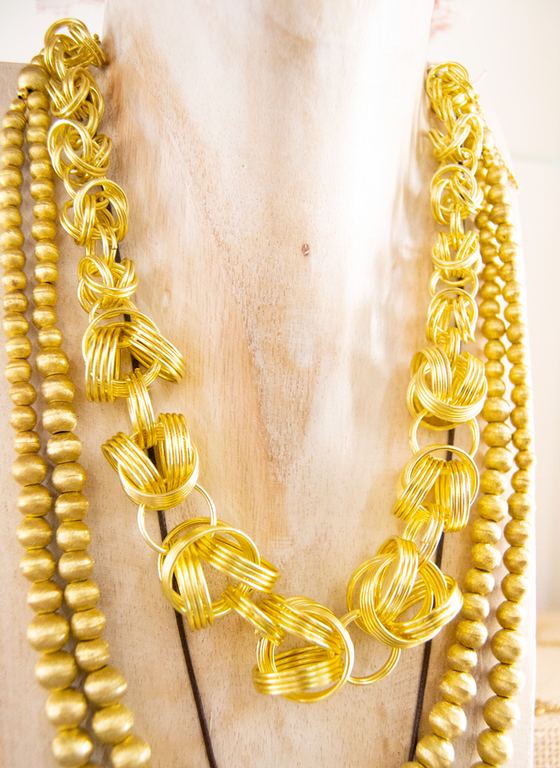
Zingarella
Città di San Marino (SM) · 9.4 km
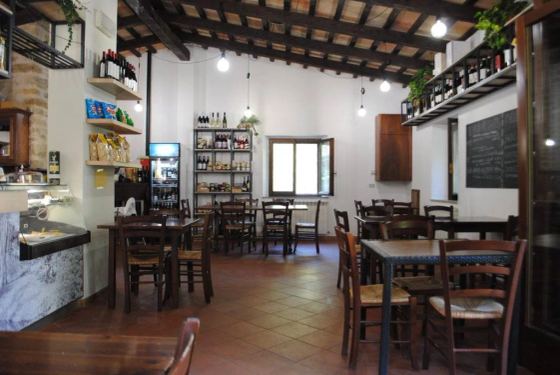
Mulino DiVINO
Frontino (PU) · 14.8 km
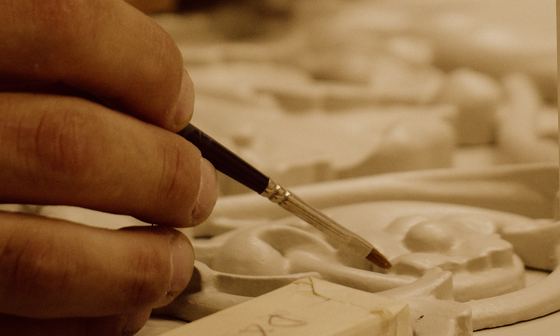
VERTAGLIA INFISSI SpA
Santarcangelo di Romagna (RN) · 17.9 km
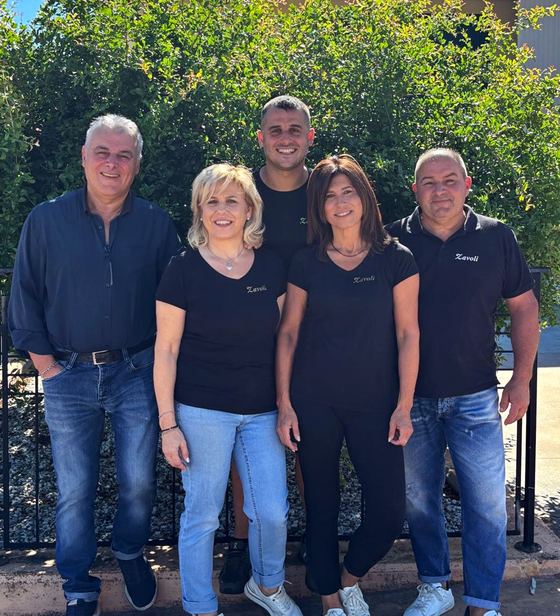
Società Agricola Zavoli S.s
Poggio Berni (RN) · 18 km

BENEDETTINI AUTO di Gianni Benedettini
Santarcangelo di Romagna (RN) · 20.4 km
Il Pescatore di Montereale
Cesena (FC) · 22.1 km
