A medieval village perched on the slopes of Etna, Castiglione di Sicilia preserves a layered historic centre with Norman, Byzantine and Greek traces. It is included in the list of the Borghi più belli d'Italia (Italy's most beautiful villages).
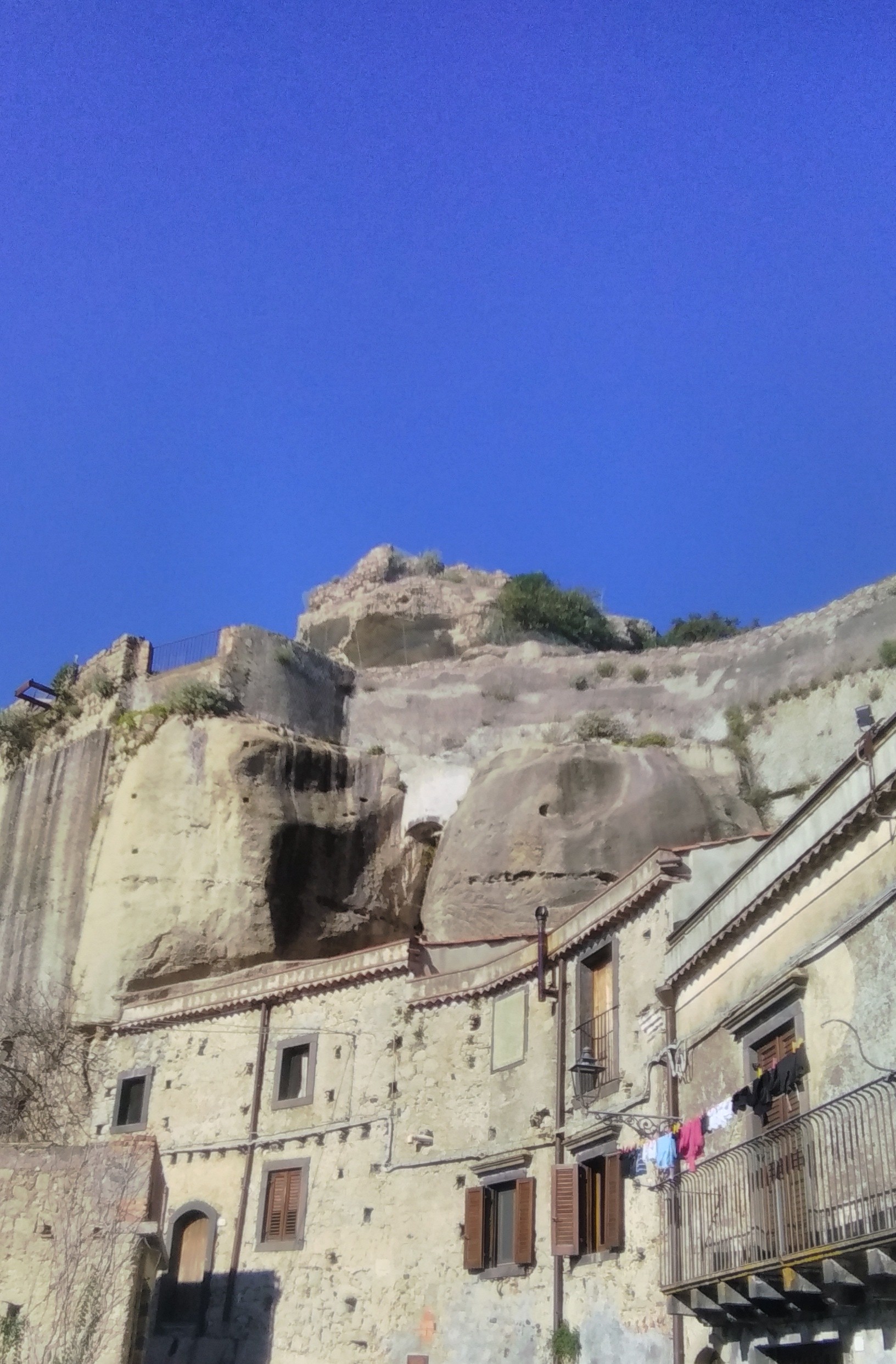
Castiglione di Sicilia sits at roughly 600 metres above sea level on the north-eastern slopes of Etna, in the stretch of land the Alcantara river carves out between Randazzo and Taormina. Its position is that of a settlement that chose the high ground for defensive reasons before scenic ones: the lava-stone houses press together along the slope, and the village's silhouette, seen from the valley, reads as a settlement that grew over time without ever losing its formal coherence.
The first documentary record dates to 1092, when the Norman Roger I referred to the place by the name *Castrileonis* — Great Castle — in a document that affirmed its strategic importance within the feudal reorganisation of Sicily. But the site's history runs deeper: Greek and Byzantine traces scattered across the surrounding territory point to a continuous presence that predates the Normans' arrival by centuries. The rock-cut churches of Greek-Byzantine rite still found in the area bear witness to a liturgical and cultural tradition that long outlasted the dominations that followed.
The historic centre holds monuments from different eras, layered with the naturalness typical of villages that have never undergone violent refoundation. The Castello dei Lauria (Lauria Castle), of which the walls and some structures survive, overlooks the urban fabric from above. Piazza Lauria, paved in lava stone, forms the hub of civic life in the village, much as it did in medieval times. The church of San Pietro is among the most significant places of worship, in a centre that counts several churches concentrated within a relatively small urban space — a sign of a community that, over the centuries, invested heavily in its own religious and public representation.
The landscape surrounding Castiglione belongs to one of the most discussed wine-growing areas of recent decades. The Etna's alberello-trained vineyards, grown on volcanic soils at high elevations, stretch along the contrade (districts) of the volcano's northern flank. The Alcantara Gorges, carved by basaltic lava over millennia of erosion, mark the territory's southern boundary. The whole — village, volcano, river, vine — forms a setting in which geological and historical stratification proceed side by side, each with its own rhythm and its own legible traces.
Castiglione di Sicilia is included in the list of the Borghi più belli d'Italia (Italy's most beautiful villages), a recognition that certifies the value of its built heritage and its surrounding landscape. What the village offers those who walk it attentively, however, is something more specific: the chance to read, through the lava stone of its buildings, the changes of hand and culture that swept through eastern Sicily over more than a thousand years of documented history — and likely many centuries more before that.
Jeanne Griffin · CC BY-SA 4.0 — Wikimedia Commons
Certified Made in Italy businesses close to this place.