
The home where the poet Petrarca spent the last years of his life, today a museum, preserves furnishings and traces of the fourteenth century in an intact medieval village on the Colli Euganei.
On the Colli Euganei, in the southern stretch of the province of Padua, Arquà Petrarca occupies the flank of a hill with the composure of a village that has never needed to reinvent itself. The paved streets, the limestone houses, the church of Santa Maria Assunta with its portico: everything contributes to a medieval layering that has remained substantially intact. The village is listed among the Borghi più Belli d'Italia (Italy's Most Beautiful Villages), a recognition that in this case corresponds to a verifiable material condition, not an exercise in image-making.
Francesco Petrarca chose Arquà as his residence in the last years of his life, probably around 1370, and died there on the night between 18 and 19 July 1374. The house where he lived — a fourteenth-century building on two floors, with a loggia and garden — is today a museum and preserves furnishings and objects from that period, including wall frescoes depicting scenes drawn from the poet's works. The embalmed cat, traditionally attributed to his household collection and placed in a niche, is one of the details that popular memory has turned into legend; its presence in the building is documented at least from the sixteenth century. The interior route allows visitors to move through the same rooms where Petrarca composed part of the *Canzoniere* and the *Trionfi*, without the mediation of staged reconstructions.
A short distance from the house stands the sarcophagus of red Verona marble that holds the poet's remains, set on a pedestal in the small churchyard facing the church. The tomb dates to 1380 and was erected at the wish of his son-in-law, Francesco da Brossano. Over the centuries it has drawn illustrious visitors — among them, according to tradition, Ugo Foscolo — and remains a point of reference for those studying the Italian lyric tradition.
The surrounding landscape belongs to the Parco Regionale dei Colli Euganei (Euganean Hills Regional Park), a volcanic area of Oligocene origin that breaks up the Veneto plain with a series of isolated hills, covered in woods of hornbeam and chestnut. Arquà sits within this setting in a panoramic position that allows, in a single sweep of the gaze, both the hilly morphology and the extent of the plain stretching east to be taken in. The poet himself, in some Latin letters, described the place with explicit appreciation for its quiet and the quality of its air.
What sets Arquà Petrarca apart from other places tied to great literary figures is the measure of the relationship between the site and the memory it holds. There is no redundant interpretive apparatus, no narrative built around absence. The house exists, the frescoes exist, the tomb exists: the distance of six and a half centuries is measured in the objects themselves, with no need for further mediation.
Arqua Petrarca - Eglise SMaria .jpg: Patrice78500 derivative work: Lkcl it · CC0 — Wikimedia Commons
Certified Made in Italy businesses close to this place.
S.I.B. SNC DI MURARO E & C
Este (PD) · 6.8 km
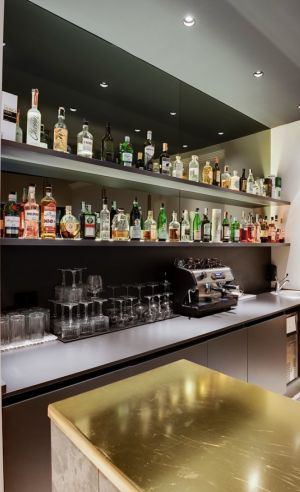
RISTORANTE POESIA
Abano Terme (PD) · 11 km
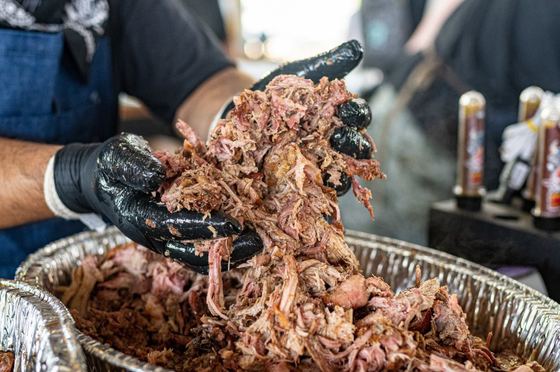
De Mori Specialità Porchetta
Albignasego (PD) · 15.4 km
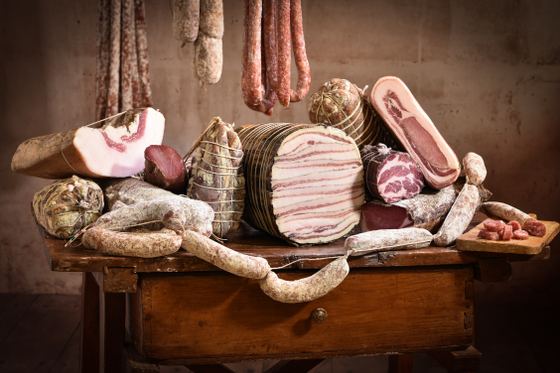
Bertelli Salumi Srl
Montagnana (PD) · 18.7 km
Ristorante Medusa
Polverara (PD) · 19.5 km
Idee Concrete di Marzia Gaglian
Montagnana (PD) · 20.1 km
