Before you go on
This site uses only what it needs to work: the language you choose, access to the members' area, and anonymous counts that tell us whether the search is answering well. For advertising campaigns we ask your permission, and without a yes nothing starts. See the full list.

The Carnevale di Fano is considered one of Italy's oldest, with origins documented to the fifteenth century, and is known for the tradition of throwing sweets from the allegorical floats.
The earliest written record of the Carnevale di Fano dates back to 1347 and is preserved in the Sezione dell'Archivio di Stato of the city. A document, not a legend: this sets Fano apart from most other Italian carnival celebrations, which trace their origins to oral traditions or approximate dating. That medieval paper places the Adriatic city, in the province of Pesaro-Urbino, in a singular position within the history of peninsular folklore.
The event unfolds around the Grandi Corsi mascherati, parades of allegorical floats that wind through the streets of the historic centre during the peak days of the season. Each float is the product of months of craftsmanship and design work, with structures that can reach considerable size and that translate the themes chosen for the current edition into sculptural form. The visual and the sonic dimensions intertwine: the Musica Arabita, a raucous and deliberately cacophonous band made up of makeshift instruments and improvised objects, accompanies the procession with a ritual din rooted deep in local tradition and standing as one of the festival's most recognisable identity markers.
The moment that most defines the popular character of the Fano carnival is the getto, the throwing of sweets and candies from the floats into the crowd. This is no modern concession to spectacle: the getto is an integral part of the festival's structure, a gesture of redistribution and participation that draws the public directly into the event, turning spectators into active recipients of the rite. Over the years, safety regulations have shaped how the throwing is carried out, but the substance of the custom has remained unchanged.
Among the figures who have left their mark on the visual history of the Carnevale di Fano is Federico Seneca, a graphic designer and illustrator from Fossombrone, known for his work with Perugina in creating some of the most iconic images in twentieth-century Italian communication. His contribution to the carnival's poster art represents a point of contact between local popular tradition and the country's visual culture. Another distinctive figure is El Vulón, a traditional mask of the city's carnival, an expression of a local imagination that has not dissolved into the standardised repertoire of national masks.
Fano itself provides a fitting setting for a celebration of this historical span: a Roman city — Fanum Fortunae, with its Arco di Augusto still standing — later a Malatesta lordship, then a papal city, and a gateway into the Marche along the Via Flaminia. The carnival takes place within this layered urban fabric, where medieval and Renaissance streets serve as a natural stage for a festival that, since the fourteenth century, has weathered foreign rule, wars and social transformation without ever breaking its continuity.
Giorgio Eusebio Petetti · CC BY-SA 4.0 — Wikimedia Commons
Certified Made in Italy businesses close to this place.
LA BOTTEGA DA SORDO E CLA
Fano (PU) · 0.1 km
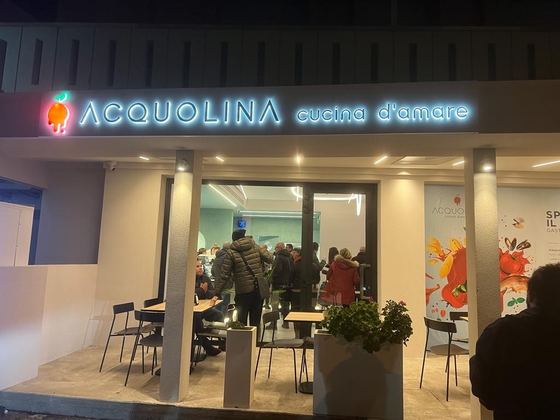
Acquolina Cucina D’Amare
Fano (PU) · 0.8 km

Sakura Beauty&Spa
Fano (PU) · 2.4 km
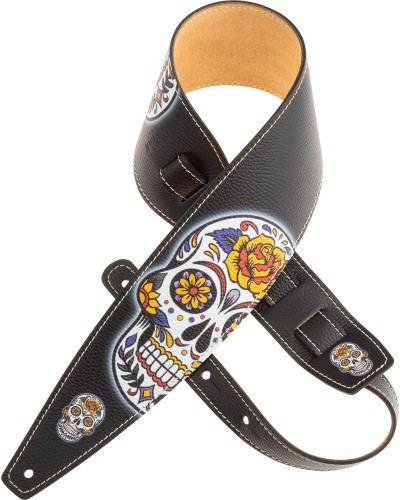
MAGRABO' - Hand Made In Italy
Fano (PU) · 3.7 km
RISTORANTE SAPORI ROMANI
Fano (PU) · 4.1 km
ESTETICA ARMONIA di Uguccioni Irene
Pesaro (PU) · 10.8 km