Before you go on
This site uses only what it needs to work: the language you choose, access to the members' area, and anonymous counts that tell us whether the search is answering well. For advertising campaigns we ask your permission, and without a yes nothing starts. See the full list.
A fine cured meat made from pork and aged in the catoji, the traditional Calabrian cellars, in the villages of Ferruzzano and Pietrapennata in the Reggio area. A niche production tied to artisanal practices handed down over time.
Ferruzzano and Pietrapennata lie inland from Locride, on the Ionian side of the province of Reggio Calabria, in that hilly band where the Aspromonte slopes down toward the sea through bare hillsides and scattered olive groves. Ferruzzano is a town that carries with it a history of abandonment: the old village, half destroyed by the 1908 earthquake and by subsequent landslides, has remained partly uninhabited, while life has shifted downhill, to the coastal hamlet. Pietrapennata, a hamlet within the same municipality, is a small settlement with only a few dozen permanent residents. In this context of depopulation and geographic marginality, certain production practices have survived not as folkloric choice but as cultural inertia, the persistence of a way of life that has found no alternative.
The capocollo (cured pork neck) made in these villages belongs to the tradition of Calabrian norcineria (pork butchery), but stands apart for where it matures: the catoji, a dialect term for cellars carved into rock or set into the semi-underground floors of rural houses. These spaces keep temperature and humidity relatively constant throughout the year, conditions that directly shape the curing process. The meat comes from pigs raised according to local practices, fed on acorns, vegetable scraps and grain. The process involves salting, seasoning with pepper and sometimes chilli, and stuffing into natural casing. Curing time in the catoji can range from a few months to over a year for batches meant for family consumption.
What sets this production apart is not so much the recipe itself, which shares common elements with other Calabrian capocolli, but the scale and the context. This is a niche production, largely domestic or at most artisanal, which has neither sought nor obtained protected designation of origin status on a national scale. Its circulation remains limited: local markets, village festivals, direct relationships between producer and buyer. This small scale is at once its fragility and the reason the product retains qualities that are hard to replicate in industrial settings.
The bond between the capocollo and the villages that produce it is part of a broader gastronomic identity of Locride, a territory for which artisanally worked pork is one of the pillars of its food culture. Ferruzzano and Pietrapennata represent, in this picture, an extreme case of persistence: communities that resist demographic emptying partly through the continuity of material practices like this one, handed down within families with no need for formal codification.
Certified Made in Italy businesses close to this place.
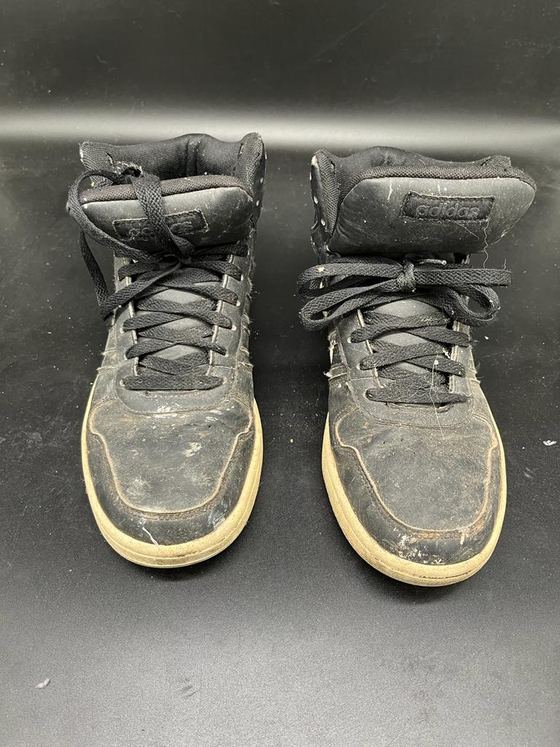
Le tue scarpe come nuove
Ardore (RC) · 18.5 km

ANGELA CRUPI LE FARFALLE IN FIORE
Siderno (RC) · 31.5 km
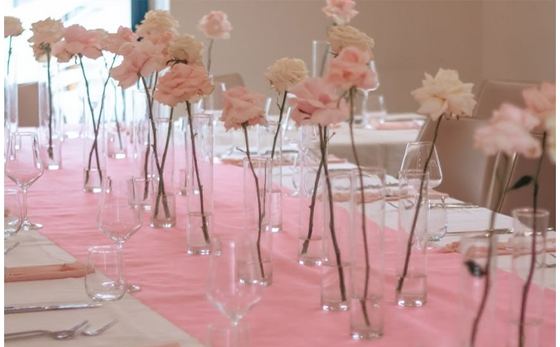
FIORI E PASSIONE DI CUPRI MARIA
Siderno (RC) · 34.2 km
L'OFFICINA DEL GUSTO
Marina di Gioiosa Ionica (RC) · 36 km
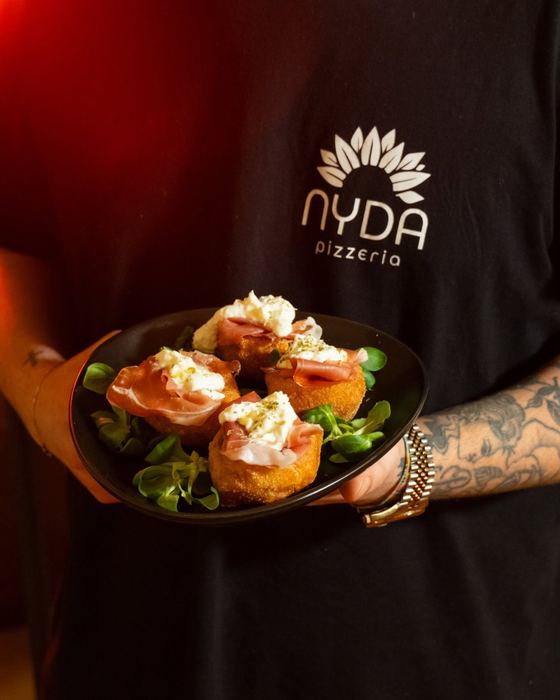
Nyda Pizzeria
Taurianova (RC) · 36 km
NIKEDO PIZZERIA ROSTICCERIA
Pellaro (RC) · 38.8 km