
A fishing village on the Golfo del Paradiso, tall coloured houses dropping to the harbour, with trails from the Portofino park leading to coves reachable only on foot.
On the eastern side of the Golfo del Paradiso, some twenty kilometres from Genoa, Camogli presents itself as a town built vertically: houses rising seven or eight storeys, packed tightly against one another and painted in ochre, brick red, mustard yellow, descend straight down to the water of the harbour. This density is no accident. The name of the village itself — which popular tradition traces to *ca' de mòggë*, "houses of the wives" — recalls the centuries when the men were almost always at sea and the women ran the life of the town. Camogli's maritime tradition reached considerable proportions in the 19th century: the local fleet was among the largest in the Mediterranean, and the town was known in ports across half of Europe.
Today that history is read in the architecture more than in documents. The harbour, compact and sheltered by a breakwater, holds fishing boats alongside pleasure craft without either seeming out of place next to the other. The Basilica of Santa Maria Assunta, which looks down over the seafront, and the Castello della Dragonara, medieval and perched on the rock that closes the harbour to the north, define an urban scene that saw no major upheavals through the 20th century. The scale of the historic centre remains that of a village, not a city, and this has concrete consequences for how one moves through it: on foot, slowly, along caruggi (narrow lanes) that climb in steps.
The boundary between the village and the Parco Naturale Regionale di Portofino (Portofino Regional Natural Park) is porous. The park's trails begin practically within the built-up area and lead along the coast toward coves with no road access. San Fruttuoso di Camogli — with its 10th-century Benedictine abbey, medieval cloister, and the Cristo degli Abissi (Christ of the Abyss) submerged eighteen metres below the surface — can be reached only by sea or on foot along trails that cut through woods of holm oak and maritime pine. This relative isolation has preserved the site in a way few stretches of Italian coastline can claim.
What Camogli offers by way of renewal is not a matter of facilities or services, but of rhythm. Time here is measured by the tides, by the light changing over the harbour in late afternoon, by the cadence of the ferries connecting the village to Portofino and Genoa. Those who arrive looking for quiet find a town that functions for its own residents before its visitors, and that balance — fragile, as all such balances are — is probably its hardest resource to replicate elsewhere.
Benjamin Smith · CC BY-SA 4.0 — Wikimedia Commons
Certified Made in Italy businesses close to this place.
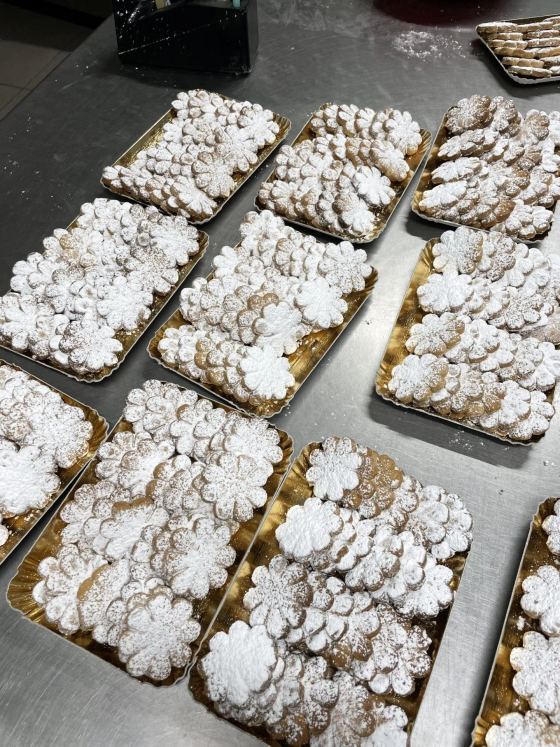
Pasticceria Arte Dolce
Santa Margherita Ligure (GE) · 5.1 km
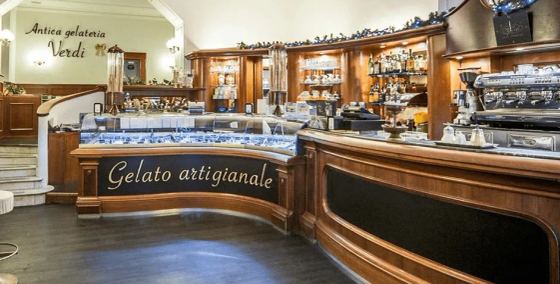
Antica Gelateria Verdi
Chiavari (GE) · 14.8 km
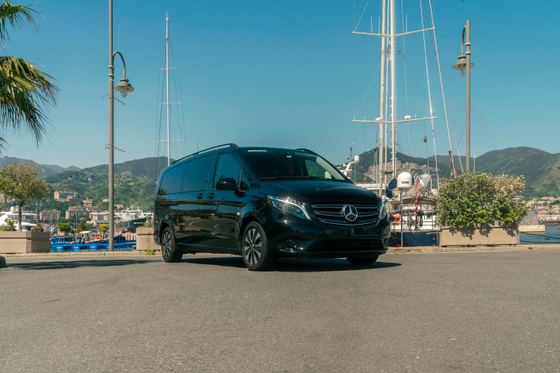
Toprent Autonoleggio Con Conducente
Genova (GE) · 16.9 km
Multicolor Distribuzione Genova
Genova (GE) · 18.1 km
ARBANELLA GENOVA Alimentari & Gastronomia
Genova (GE) · 18.8 km
Acqua Doctor
Genova (GE) · 22.9 km
