
A route of around 125 km connecting the Santuario di Dinnammare to the Santuario di Tindari through the lesser-known villages of the Messina Peloritani, weaving together history, nature and Marian devotion. It passes through little-visited places such as Fiumedinisi, Mandanici, Antillo, Novara di Sicilia and Tripi.
The Cammino dell'Anima (Path of the Soul) originates from an ancient devotional axis: one that, along the ridge of the Peloritani Mountains, links two Marian sanctuaries of north-eastern Sicily. On one side, the Santuario di Dinnammare, set on the heights overlooking Messina and the Strait, where devotion to the Madonna dates back centuries of local pilgrimage. On the other, the Santuario di Tindari, on the promontory facing the Tyrrhenian Sea, home to one of the island's most venerated icons: the Madonna Nera (Black Madonna), whose wooden effigy of eastern origin has stood at the centre of uninterrupted popular devotion since at least the Middle Ages. Between these two poles, roughly 125 kilometres of trail, divided into six stages, cross a Sicily that ordinary circuits never reach.
The route runs entirely along the Dorsale Peloritana, the mountain system that forms the northern spine of the Messina area, the furthest extension of the Calabrian Apennines beyond the Strait. The landscape is that of an inland territory largely untouched by post-war transformation: oak and chestnut woods, ridgelines alternating between open pasture and Mediterranean scrub, valleys crossed by seasonal streams. The villages along the way — Fiumedinisi, Mandanici, Antillo, Novara di Sicilia, Tripi — are small settlements, some with fewer than a thousand inhabitants, where local stone architecture and medieval town planning have survived not through conservation policy but simply through the absence of demographic and tourist pressure. Novara di Sicilia, in particular, is known for its position atop a rocky spur and for its traditions tied to the production of maiorchino, a matured sheep's-milk cheese belonging to Sicily's dairy heritage.
The folkloric and devotional dimension of the path is not a narrative addition: it is the structural reason this route exists at all. The Peloritani mountains around Messina were for centuries a land of transhumance, of votive processions, of patronal feasts tied to the agricultural calendar. Every village preserves its own layering of rites: the August feasts of the Madonna, the spring rogations, the devotions to the patron saints of livestock. The path intercepts this sacred geography by walking, quite literally, from one place of worship to the next, following in part routes that local pilgrims once covered on foot before asphalt roads made slow movement obsolete. The Madonna Nera of Tindari, the final destination, remains the object of a pilgrimage that still draws the faithful from across Sicily and Calabria, an unbroken continuity across the ages.
The route fits into a moment in which Italy's paths, following the Compostela model, have found their own regional identity. The Cammino dell'Anima does not replicate northern European patterns: its rhythm is Mediterranean, marked by intense light, by water scarcity in the summer months, by a concentration of history within geographically narrow spaces. Tripi, the last stage before Tindari, stands near the ancient Abacaenum, a Siculo-Greek city of which traces remain in the surrounding territory. The layering of Greek, Norman, Spanish and rural time is a constant feature of this stretch of Sicily, and the walker's slow pace is perhaps the only speed at which it can truly be perceived.
Shifegu · CC0 — Wikimedia Commons
Certified Made in Italy businesses close to this place.
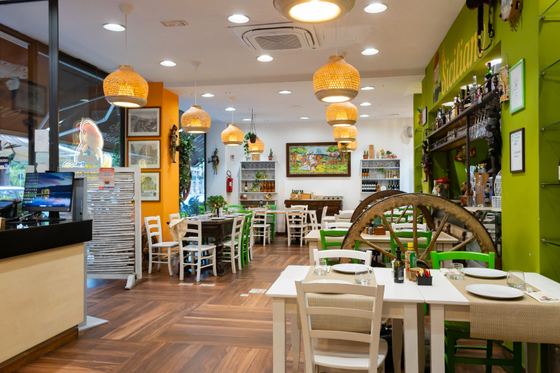
Il Siciliano
Messina (ME) · 0.3 km
PRODOTTI TIPICI CALABRESI DI GIORDANO CARMELA
Reggio Calabria (RC) · 12.2 km
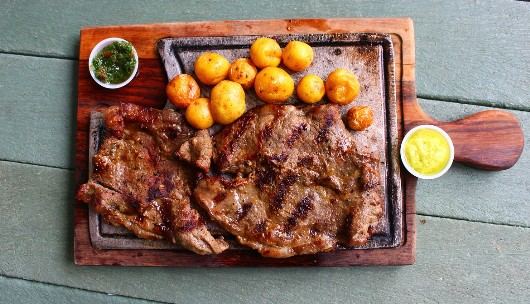
GASTRONOMIA DEL CARMINE
Reggio Calabria (RC) · 12.6 km

RISTORANTE BRACERIA PIZZERIA VILLEGGIANTE DA CICCINO
Reggio di Calabria (RC) · 13.1 km
ZANZIBAR BAR - GELATERIA
Scilla (RC) · 15.5 km
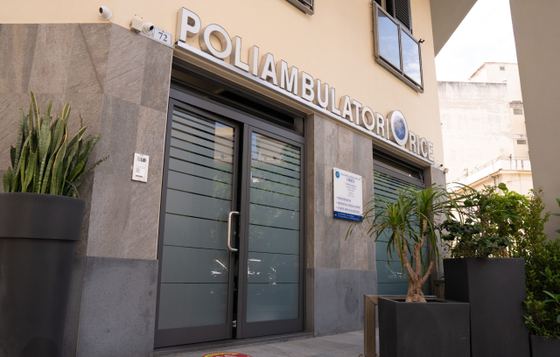
Poliambulatorio Orice
Milazzo (ME) · 27.7 km
