
A village perched on a tufa cliff in the Treja Valley, known for its bohemian atmosphere and the craft workshops that line its medieval lanes.
Calcata stands on a spur of tufa stone that the Treja Valley has shaped over the centuries with the same patience with which water carves the soft rock of the Agro Falisco. The village belongs to southern Tuscia, that stretch of territory between Viterbo and Rome where Faliscan civilization — culturally distinct from the Etruscan, and perhaps older — left traces still legible in the landscape and the subsoil. The tufa that supports the houses is the same stone that surfaces in the valley's sheer walls, in the pinnacles and gorges the Treja has carved over time. This continuity between building material and local geology is not an ornamental detail: it is the reason Calcata seems to have grown out of the rock rather than been set upon it.
The cooking practiced here — which some families in the village have handed down without interruption — belongs to the peasant tradition of southern Tuscia, a cuisine born of necessity that has, over time, become a cuisine of character. The territory's products reflect the volcanic soil and the valley's microclimate: hazelnuts, wild herbs, mushrooms from the woods covering the canyon walls, vegetables grown in gardens carved into the edges of the spur. This is not a gastronomy codified in protected denominations, but a practical knowledge that survives in its most discreet form: passed down orally, generation to generation, within the walls of the home.
Since the 1970s, Calcata has welcomed a community of artists and craftspeople who chose the village as a permanent home, turning abandoned medieval dwellings — the town had been declared unfit for habitation in 1935, its original residents moved to a new settlement nearby — into workshops and studios. This layering has produced an unusual coexistence between rural memory and contemporary sensibility, one that is reflected in how food is understood and offered here. The workshops that open onto the narrow lanes do not draw a sharp line between craft and cooking: the same attentiveness to working by hand, to raw matter carefully transformed, runs through both.
The Treja Valley Regional Park, which surrounds the village on three sides, provides the natural context in which this food culture makes sense. The dense vegetation covering the rock walls changes with the seasons and determines what can be gathered: mushrooms and chestnuts in autumn, bitter herbs from the woodland edges in spring. Calcata offers no showcase gastronomy, but a relationship with the land that remains legible on the plate, for those who know where to look.
OrCer · CC BY-SA 4.0 — Wikimedia Commons
Certified Made in Italy businesses close to this place.
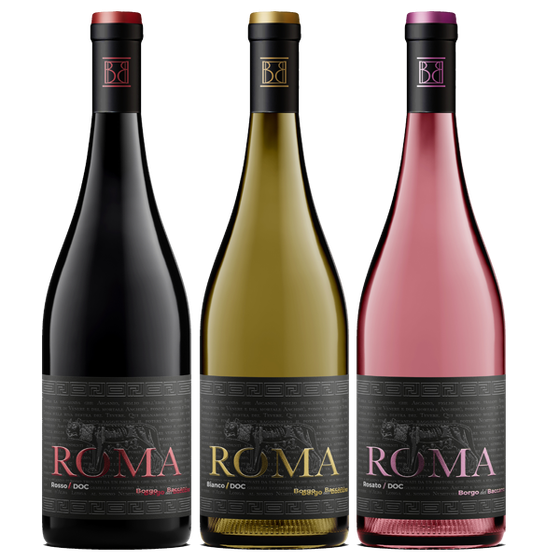
Borgo del Baccano
Campagnano di Roma (RM) · 13.8 km
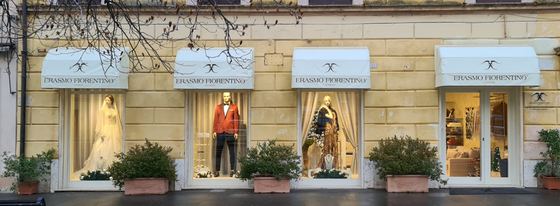
Erasmo Fiorentino Couture
Poggio Mirteto (RI) · 20.1 km
I Pusceddu Di Gianluca Ferraro Laboratori Di Pasticceria
Roma (RM) · 27.5 km
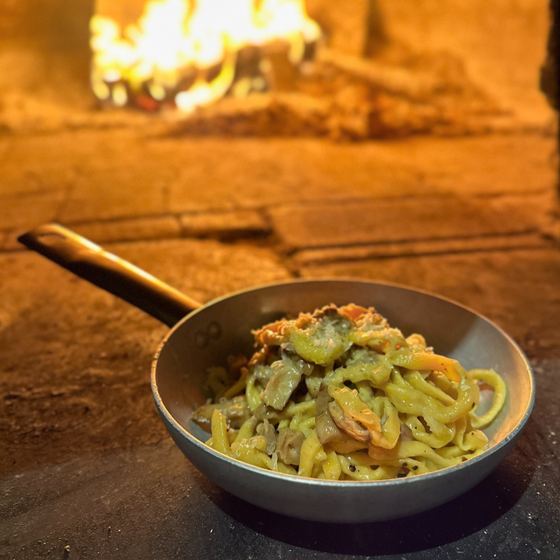
Osteria Sammartinese Da Saverio
San Martino Al Cimino (VT) · 29.6 km

CA.RI. COSTRUZIONI S.R.L. - Società Benefit
Roma (RM) · 30 km

Venditti Luxury Detailing Car
Roma (RM) · 30.4 km
