Before you go on
This site uses only what it needs to work: the language you choose, access to the members' area, and anonymous counts that tell us whether the search is answering well. For advertising campaigns we ask your permission, and without a yes nothing starts. See the full list.

Medieval borgo inland from Catanzaro overlooking the Ionian Sea, known for having welcomed immigrant communities in the 1990s in a repopulation experiment that made history. It preserves an ancient urban fabric and an authentic small-town life.
Badolato stands on a hilltop spur inland from the province of Catanzaro, a few kilometres from the Ionian coast, at an altitude that allows the waters of the Ionian Sea and the peaks of the Aspromonte to be taken in with a single glance. The medieval borgo — founded, according to historical sources, around the year 1000 — developed along an urban layout that has preserved its original structure: narrow lanes, stone stairways, noble palazzi with carved portals, churches marking the nodes of the built fabric. The population living in the historic centre has declined over the decades, as has happened to most inland Calabrian borghi, leaving many houses empty and silent.
It was precisely this gradual emptying that in 1997 became the starting point of an episode that has remained part of Italy's civic memory. When a ship carrying around two hundred Kurdish refugees landed on the nearby coast, Badolato's mayor at the time proposed housing some of the migrants in the uninhabited historic centre, offering empty homes as temporary shelter. The initiative was among the first in Italy to try to reconcile the emergency of reception with the problem of depopulation in small towns, and it drew national and international attention that turned Badolato into a reference point in the debate on repopulation policies. The model did not lead to a stable, long-term settlement, but its echo remained, and the borgo continued to be cited in the following decades whenever the issue returned to the centre of public debate.
The historic centre preserves several notable buildings. The Chiesa di San Domenico (Church of San Domenico), the Convento dei Domenicani (Dominican convent) and the Chiesa dell'Immacolata (Church of the Immaculate) are among the religious buildings that punctuate the borgo's skyline. The noble palazzi — including Palazzo Marullo and other historic residences — bear witness to a social stratification that in the Middle Ages and the early modern period had made Badolato a place of some importance for the surrounding territory. The urban landscape is not one restored for tourism: the marks of time are visible in the façades, in the worn stone, in doorways that have not opened in years.
The borgo's geographical position also defines its distinctive character. From certain points in the historic centre the line of the sea is visible in the distance, while behind rise the wooded slopes of the Catanzaro hinterland. Badolato Marina, the coastal hamlet born after the war to meet the needs of those who moved down towards the shore, is today the most populous part of the municipality, with around three thousand inhabitants against the few hundred left in the old borgo. This duality — the old town on the height and the marina below — is a structure common to many Calabrian settlements, but in Badolato it takes on a particular clarity, almost a demonstration in itself, in the physical and demographic distance between the two settlements.
Ensahequ · CC BY-SA 4.0 — Wikimedia Commons
Certified Made in Italy businesses close to this place.
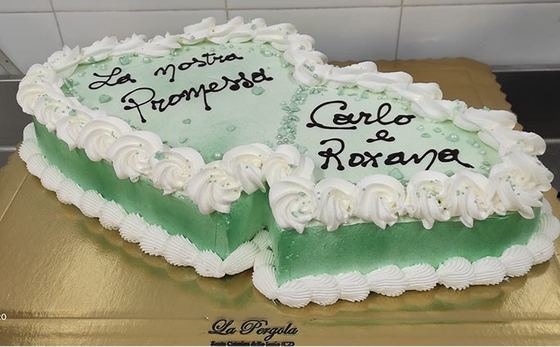
LA PERGOLA Bar Pasticceria Gelateria
Santa Caterina dello Ionio (CZ) · 6.3 km
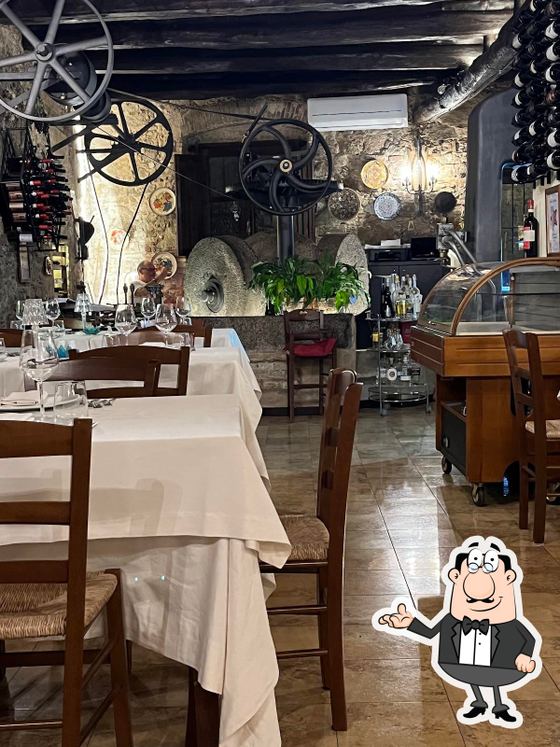
OSTERIA IL FRANTOIO
Soverato (CZ) · 13 km
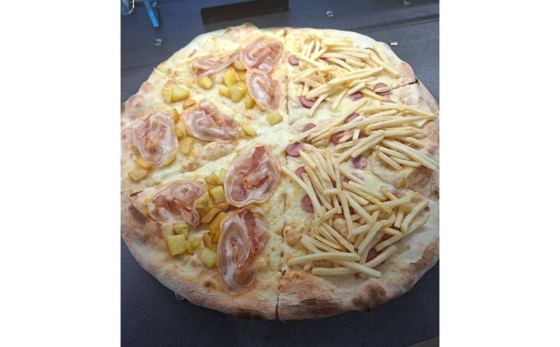
L'ANGOLO DELLA PIZZA
Soverato Marina (CZ) · 13.3 km
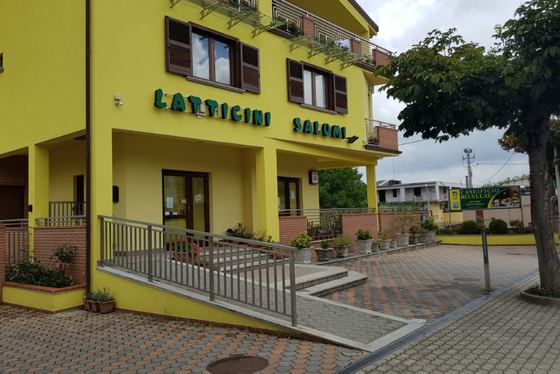
Rovilat
San Vito sullo Ionio (CZ) · 17.9 km

LA FAVOLA SIAMO NOI
San Pietro A Maida (CZ) · 33.6 km
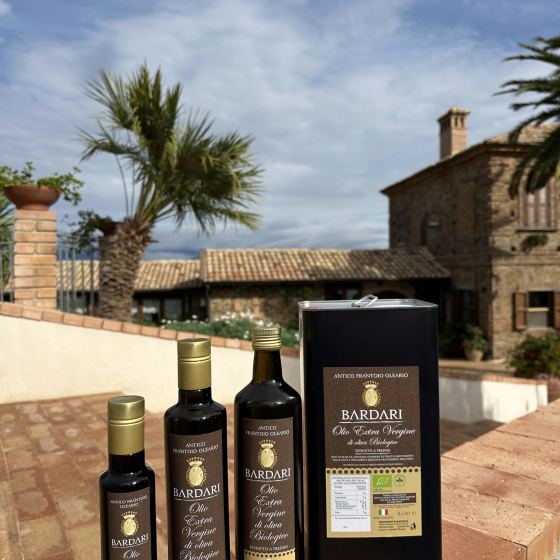
Antico Frantoio Bardari
Curinga (CZ) · 33.7 km