Before you go on
This site uses only what it needs to work: the language you choose, access to the members' area, and anonymous counts that tell us whether the search is answering well. For advertising campaigns we ask your permission, and without a yes nothing starts. See the full list.

The Salento hinterland preserves a network of small villages where local artisans hand down manual techniques tied to the territory's materials, from pietra leccese to cartapesta, in a community context still very much alive.
In the hinterland of the province of Lecce, away from the coast and the more travelled routes, a number of small villages preserve a craft continuity that has never needed to reinvent itself in order to survive. Here manual production has not been converted into an attraction, nor turned into a museum piece: it remains an ordinary practice, rooted in the rhythms of the community, passed on mostly within families or between master and apprentice, according to ways of transmission that predate any formal teaching.
Pietra leccese (Lecce stone) is the material that, more than any other, defines the visual identity of this territory. It is a soft limestone, straw-yellow in colour, quarried in the area for centuries and worked with hand tools — chisels, points, gradines — whose essential form has not changed. The stonecutters of the villages of the Lecce hinterland work the stone for architectural purposes, for decorative elements, for objects of civil and religious use. The material lends itself to the definition of minute detail, and it is precisely this pliability that made possible the ornamental excess of Lecce Baroque; in the workshops of the smaller villages, the same stone is approached in a more restrained register, without the drive of monumental commissions.
Alongside stoneworking, the Salento hinterland preserves the tradition of cartapesta (papier-mâché), a technique found throughout the province of Lecce and particularly rooted in the inland towns. Lecce's cartapesta — distinct from other Italian traditions for its technique of layering paper over a clay core — is historically linked to the production of votive statues and sacred figures destined for the churches and processions of the villages. Some workshops active today carry on this production in direct continuity with nineteenth-century ateliers, keeping the same working stages: the modelling of the clay, the layering of wet paper, the smoothing, the final polychrome finish done entirely by hand.
The setting in which these crafts are practised is not separate from the life of the village. Workshops often open directly onto lanes or squares, the work takes place in spaces shared with the home, and the boundary between production and daily life remains porous. This is not a minor detail: it is the condition that has allowed techniques to be handed down without interruption, in the absence of formal institutions charged with their preservation. The community has functioned as a living archive, and continues to do so, even as the number of practitioners declines.
What characterises this widespread craft fabric is its resistance to touristic specialisation. In many cases, production is still oriented toward local commissions — restoration of historic buildings, church furnishings, objects for domestic use — rather than toward the souvenir market. This orientation has preserved a technical quality that would otherwise probably have degraded under the pressure of serial production. Inland Salento, in this sense, offers a reading of the relationship between territory and craft that the coast, with its intense seasonality, cannot render with the same clarity.
Lupiae · CC BY-SA 3.0 — Wikimedia Commons
Certified Made in Italy businesses close to this place.
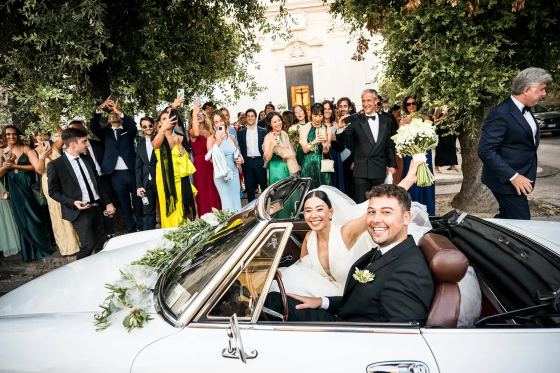
Maraca Fotografia
Lecce (LE) · 0.5 km
ANTICA PUCCERIA GIANNONE DAL 1941
Lecce (LE) · 0.7 km
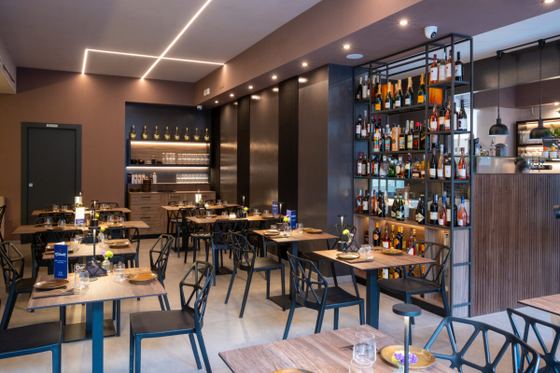
CELSIUS PIZZERIA
Lecce (LE) · 1.5 km
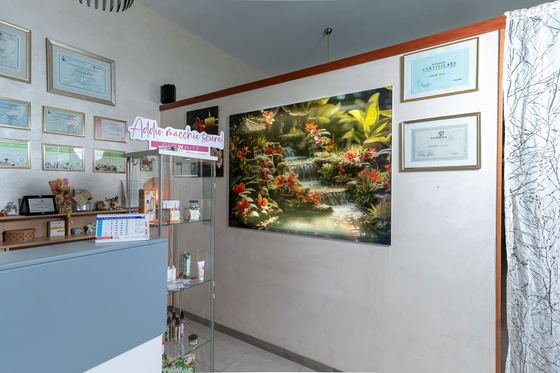
Leilani Benessere ed Estetica di Alessandra Bianchi
Lecce (LE) · 1.6 km
Salento Ammaccature Di Dario Savina
Trepuzzi (LE) · 10.4 km
IL GIARDINO DEL SILENZIO - FUNERAL HOME
Leverano (LE) · 17.1 km