
Medieval village in the Euganean Hills, known for having hosted the poet Petrarca's final years, an established cycling stage with picturesque hillside views.
On the Euganean Hills, in the province of Padua, Arquà Petrarca occupies a hillside with the composure of a settlement that has never sought to be anything other than what it is. The Latin name — *Arquatum* or *Arquata*, later vernacularised into *Arquada* — refers to the morphological shape of the land, and this detail alone says something about the nature of the place: a village that carries its own origin inscribed in the very word by which it is called. The settlement's roots reach back to the early Middle Ages, when the site lay along a probable defensive line connecting the Rocca di Monselice — seat of Lombard political and administrative jurisdiction — with Valle San Giorgio, Cinto Euganeo and the plain towards Vicenza. Before that, the territory had been inhabited by the ancient Veneti and, in the age of the emperor Augustus, was included within the Tenth Italic Region. Towards the end of the nineteenth century, near Lago della Costa, a prehistoric settlement dating to the late Bronze Age was uncovered, which had developed on the shores of the small lake at the boundary between the territories of Arquà and Monselice.
It is the fourteenth century, however, that shaped the character the village still preserves today. Francesco Petrarca chose Arquà to spend the final years of his life, from around 1370, and died there in July 1374. The house where he lived — an unadorned building frescoed with scenes drawn from his works — is now a museum open to visitors, holding period furnishings and testimonies. The poet's tomb stands in the small square facing the church of Santi Cosma e Damiano, in a red Verona marble sarcophagus raised on pillars, which over the centuries has become a destination for literary pilgrims from across Europe. The village owes to Petrarca's name not only its renown, but also the second part of its official name, added in modern times to distinguish it from other places sharing the same name.
The landscape surrounding Arquà is characteristic of the Euganean Hills: volcanic-origin hills covered with vineyards and olive groves, with vegetation that shifts register according to altitude and exposure. The village is included in the list of the Borghi più belli d'Italia (Italy's Most Beautiful Villages) and lies within the Euganean Hills Regional Park, established in 1989. Narrow streets, stone houses, loggias and medieval portals form an urban fabric that has remained largely intact, far from the transformations that have affected many towns on the Padua plain. The network of cycling routes crossing the hills passes through here too, placing the village within a broader itinerary that connects natural landscape and historical layering without either one overshadowing the other.
Alessandro Vecchi · CC BY-SA 3.0 — Wikimedia Commons
Certified Made in Italy businesses close to this place.
S.I.B. SNC DI MURARO E & C
Este (PD) · 6.8 km
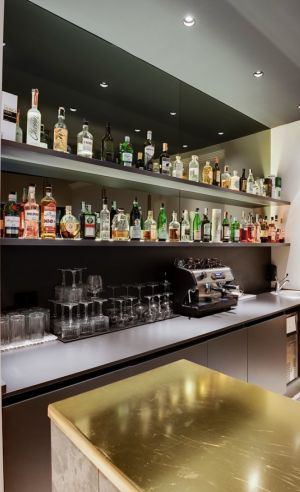
RISTORANTE POESIA
Abano Terme (PD) · 11 km

De Mori Specialità Porchetta
Albignasego (PD) · 15.4 km
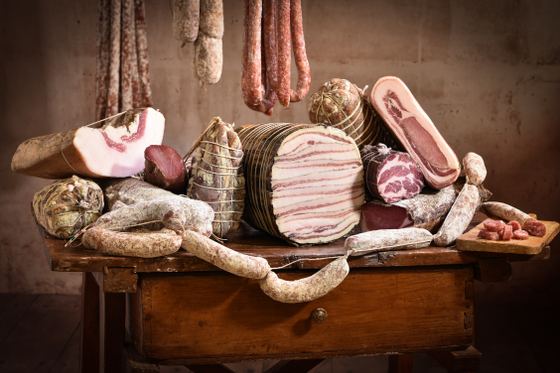
Bertelli Salumi Srl
Montagnana (PD) · 18.7 km
Ristorante Medusa
Polverara (PD) · 19.5 km
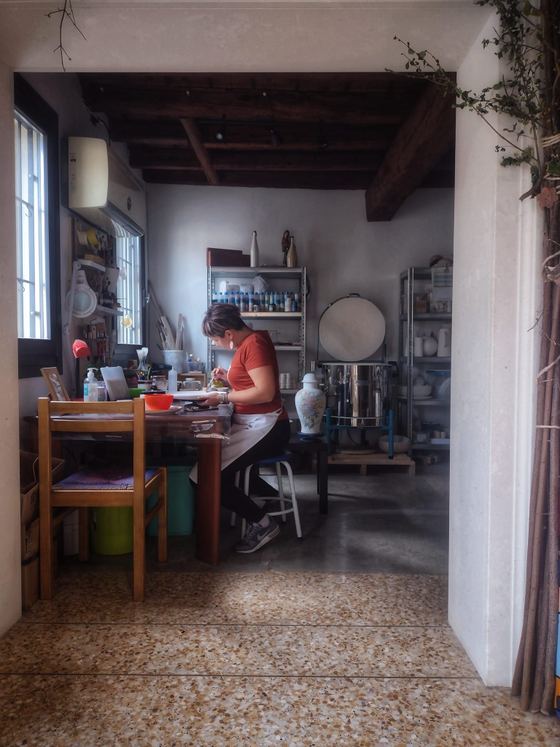
Idee Concrete di Marzia Gaglian
Montagnana (PD) · 20.1 km
