
A town in the Cosentino hinterland where the rural culture tied to olive oil and grain milling remains legible in the landscape and in the surviving historic structures.
Altomonte stands at 455 metres above sea level, in the stretch of the Esaro Valley that separates the Sibari plain from the southern edges of the Pollino National Park. From this position the town, in the province of Cosenza, governed for centuries an agricultural territory of remarkable fertility, where olive growing and cereal farming were not marginal activities but the economic backbone of the entire community. The landscape surrounding the historic centre still bears the marks of that productive system: terracing, rural tracks, and the structures — often reduced to ruins or absorbed into later buildings — that once housed oil mills and water- or animal-powered grain mills.
The presence of these facilities was no accident. The Esaro and its minor tributaries supplied the motive power needed to grind grain, while the widespread olive groves across the hillsides made a network of oil mills distributed across the territory a necessity. Oil and flour were the two commodities that governed exchange relationships, agrarian contracts and, to a large extent, daily diet. Producing them required technical skills passed down within families and precise knowledge of the seasonal cycles: olive harvesting between November and January, grain milling in the months following the summer harvest. This calendar marked the town's time with a regularity that the modern economy has gradually worn away.
The Museo Civico (Civic Museum), housed in the former Dominican convent adjoining the Chiesa di Santa Maria della Consolazione — a Gothic-Angevin church built in the 14th century at the behest of the Sangineto family — holds artefacts that allow this productive stratification to be read alongside the painted masterpieces attributed to Simone Martini and Bernardo Daddi. The coexistence, within the same conventual space, of works of art commissioned by the aristocracy and documentation of the territory's material life reflects the complexity of a town that was never merely a feudal outpost, but a centre with its own economic and social structure.
What remains of Altomonte's historic oil mills and grain mills cannot easily be organised into a defined itinerary: these are scattered presences, often unmarked, that call for a careful reading of the territory rather than a conventional guided visit. It is precisely this trait that sets Altomonte apart from many other towns of the Calabrian hinterland: the rural culture bound to oil and milling has not been turned into a separate museum display detached from its context, but remains legible in the landscape as a living sediment — in the dry-stone walls, in the water channels, in the worn stone of the thresholds.
Fiore Silvestro Barbato · CC BY-SA 2.0 — Wikimedia Commons
Certified Made in Italy businesses close to this place.
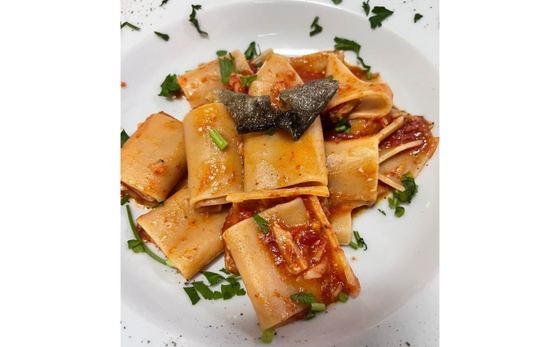
La Romantica di Dario Ruggiero
Mottafollone (CS) · 7.7 km

PANIFICIO AITA SRL - ORO DI CALABRIA
San Lorenzo del Vallo (CS) · 10.2 km
Hop Non Solo Caffè - di Orlando Pellico
Castrovillari (CS) · 14.6 km
RIMAV Porte&Finestre
San Lotrenzo del Vallo (CS) · 15.8 km
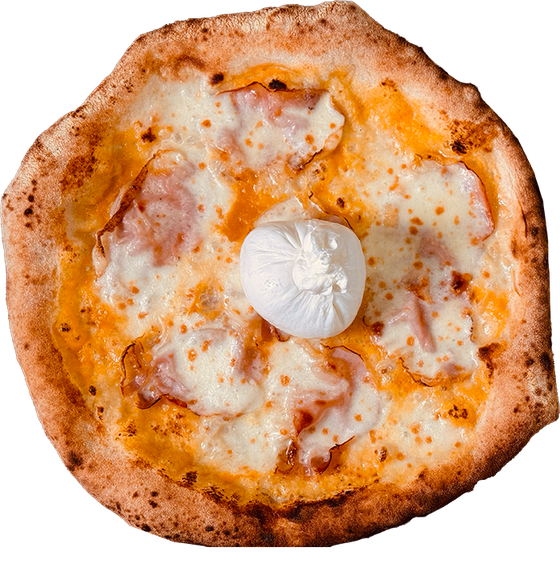
Piazza Vecchia - Pizzeria Trattoria
Spezzano Albanese (CS) · 16.1 km
Panificio Fiore Di Maurizio Fiore
Grisolia (CS) · 27.4 km
