
Red wine of Hellenic origin grown on the slopes of the ancient Vulture volcano, considered the signature wine of northern Basilicata. The volcanic soil gives the grape variety unique characteristics that set it apart in the southern Italian wine landscape.
The name itself carries its own history. Aglianico most likely derives from the term "Hellenico", a linguistic trace of the grape variety's Greek origin, carried to the coasts of Magna Graecia by Hellenic settlers and then moved inland up to the slopes of Monte Vulture, in what is now northern Basilicata. Venosa — the ancient Roman Venusia, birthplace of Horace — is the gravitational center of this production area, together with a constellation of neighboring municipalities such as Rionero in Vulture, Barile, Rapolla and Melfi, all included in the DOC area established in 1971 and later elevated to DOCG under the name Aglianico del Vulture Superiore in 2010.
Vulture is an extinct volcano whose last activity dates back some 130,000 years. What remains is a landscape of craters filled by lakes — the Monticchio lakes — and a soil of basaltic and tuff origin that gives the wines a distinct minerality, difficult to replicate elsewhere. Vineyard elevations range between 200 and 700 meters above sea level, with day-night temperature swings that slow grape ripening and preserve the natural acidity of the bunch. Aglianico is a late-ripening variety: the harvest often stretches into late November, when lowland vineyards have already fallen silent for weeks.
The resulting wine is structured, with dense tannins and pronounced acidity that make it suited to long aging. In the Superiore versions, the standard requires a minimum aging period of three years, at least one of which in wood. Over time, the color evolves from ruby red toward garnet hues, and the aromatic profile opens onto notes of dark fruit, spice, tobacco and iron-rich earth — the same volcanic soil visible in excavation sections along country roads, black and compact like graphite.
The modern production history of this area has a precise date: 1957, the year Cantina di Venosa was founded, a cooperative born from the initiative of 27 members and grown to today bring together around 350 producers across 800 hectares. Alongside cooperative ventures, private wineries of various sizes have established themselves over the decades, spread across Venosa, Rionero in Vulture and the surrounding municipalities. The territory has thus built a supply chain that runs from the small family vineyard to structured production for export, with neither scale excluding the other.
Venosa itself deserves to be read on its own terms, apart from the wine that surrounds it. The town preserves a layered historic center — Roman remains, a fifteenth-century Aragonese castle, the unfinished Norman church known as the "Incompiuta" (Unfinished Church) — and carries with it the memory of a strategic position that made it a military stronghold in Roman times, a Norman outpost in the Middle Ages, and later the setting for brigand raids in the nineteenth century among the woods of Vulture. Wine and landscape are here inseparable from this sedimentation of events, and one cannot be fully understood without the other.
Unpodizucchero · CC BY-SA 4.0 — Wikimedia Commons
Certified Made in Italy businesses close to this place.

LELLA LA SPOSA ELEGANTE Bomboniere Oggettistica Complementi D'Arredo Abiti da Sposa
Lavello (PZ) · 9.4 km
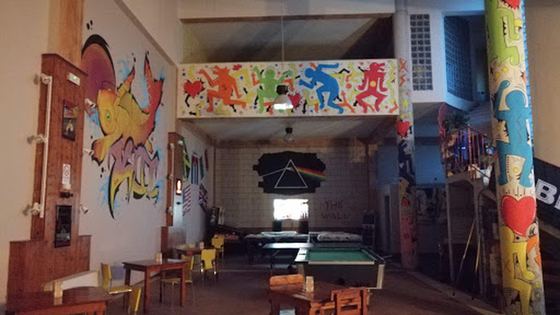
NAMASTE' COCKTAIL BAR
Rionero In Vulture (PZ) · 12.5 km

ENO' ENOGASTRONOMIA DEI PASSANTI
Melfi (PZ) · 14 km
LATTERIA DEL CORSO - DI TEDONE ALDINO
Minervino Murge (BT) · 25.8 km
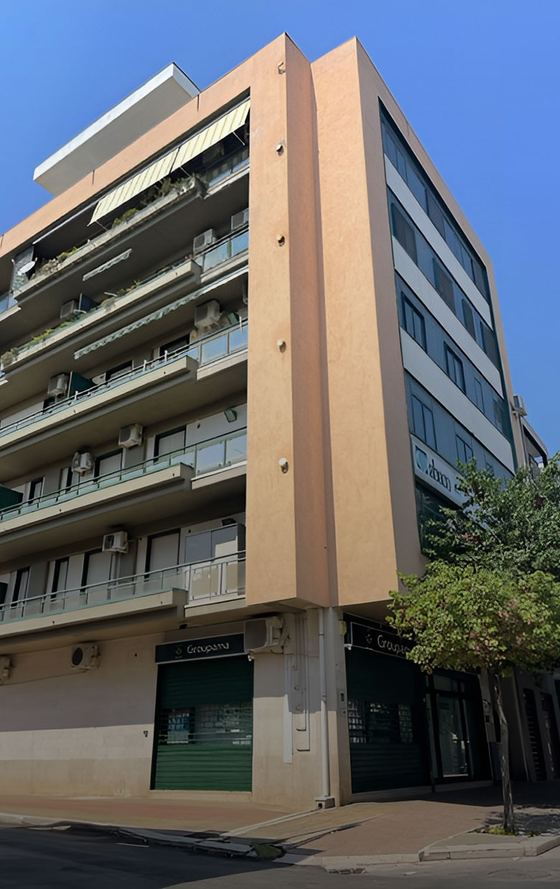
Calice Immobiliare Srl
Cerignola (FG) · 34.7 km

Cargo Srl
Potenza (PZ) · 36.6 km
