Before you go on
This site uses only what it needs to work: the language you choose, access to the members' area, and anonymous counts that tell us whether the search is answering well. For advertising campaigns we ask your permission, and without a yes nothing starts. See the full list.

Ancient preparation made from flour cooked on terracotta testi, between Liguria and Lunigiana, among the oldest forms of pasta in Italian tradition.
Pontremoli sits at the point where the River Verde flows into the Magra, in northern Lunigiana, in the province of Massa-Carrara, along the route of the Via Francigena, which for centuries channelled pilgrims and goods between continental Europe and Rome. It is in this borderland — suspended between the Ligurian Apennines and the Tuscan-Emilian Apennines, between two regions and more than one culture — that one of the oldest food preparations on the peninsula has survived: testaroli.
The name comes directly from the cooking tool, the testo, a round terracotta or cast-iron vessel made of two matching parts, heated over an open flame. The batter — water, flour and salt, sometimes spelt in the more archaic version — is poured onto the scorching lower testo, covered with the upper one, and left to cook until it forms a compact, porous sheet. Once cooled, the sheet is cut into diamond shapes and briefly dipped in boiling water before being dressed. This double cooking — first over dry heat, then in water — is a technique with no precise equivalent in contemporary Italian tradition.
Theories on its origin place testaroli in a pre-Roman period, when cooking on stones or terracotta surfaces was the ordinary way of turning ground grain into food. The shape of the testo echoes utensils documented in Bronze Age archaeological contexts, and the simplicity of the batter — no eggs, no fat — fits a subsistence cuisine that presupposes neither ovens nor elaborate equipment. What makes the continuity of this preparation worth attention is that it is not a philological reconstruction, but a practice that has remained in use in the valleys of Lunigiana without any documented interruption.
The traditional dressing varies according to geography: Genoese basil pesto prevails in the versions closer to Liguria, while extra virgin olive oil with pecorino cheese or a walnut sauce characterise the more inland variants. Slow Food has recognised testaroli di Pontremoli as a Presidio (a Slow Food project protecting small-scale traditional foods), flagging the risk that artisan production — tied to the use of the traditional testo and to a management of the fire that requires direct experience — might give way to industrial simplification. The Presidio has helped keep visible the distinction between the authentic product and imitations made with conventional methods.
Today testaroli are found in the trattorie of Pontremoli and neighbouring municipalities, such as Fosdinovo and the villages of the Val di Magra, often alongside other dishes of Lunigiana cuisine. Their presence on the menu is never decorative: they remain a substantial first course, dense and slightly spongy in texture, which absorbs the dressing differently from any extruded pasta or egg-based sheet. Anyone tasting them for the first time is faced with something that falls outside the usual categories — neither pasta, nor bread, nor polenta — and that carries within its simplicity the trace of a technique that has crossed millennia without needing to justify itself.
J.P.Lon · CC BY-SA 3.0 — Wikimedia Commons
Certified Made in Italy businesses close to this place.
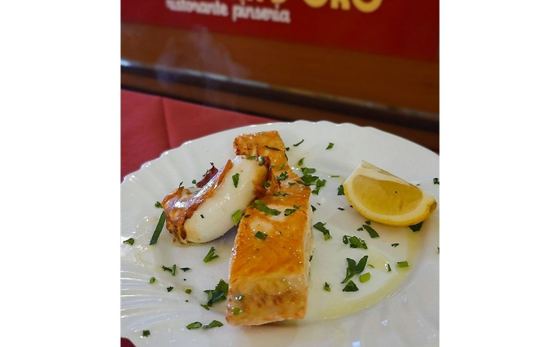
LA PALMA D'ORO RISTORANTE PINSERIA Giovanni e Eleonora
Piano di Follo (SP) · 24.2 km
LA CASA DELLA POMPA
La Spezia (SP) · 28.7 km

Cantina TERRE DI Levanto - ENOTECA FUORIPORTA della Cantina TERREDILEVANTO
Levanto (SP) · 28.7 km
GUSTO SICILIANO
La Spezia (SP) · 29 km
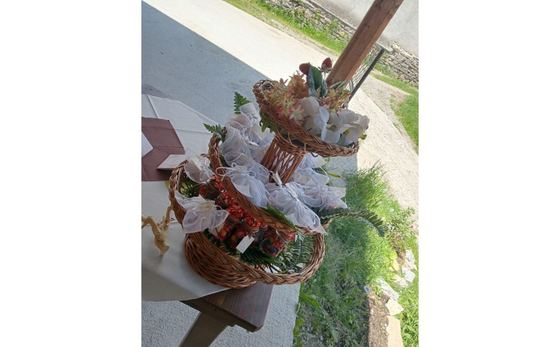
Azienda Agrituristica - '' La Merenderia''
Bedonia (PR) · 29.6 km
WOW EMOTIONAL FOOD
La Spezia (SP) · 30.7 km