Before you go on
This site uses only what it needs to work: the language you choose, access to the members' area, and anonymous counts that tell us whether the search is answering well. For advertising campaigns we ask your permission, and without a yes nothing starts. See the full list.

Three villages in the province of Matera preserve an authentic, little-explored gastronomic tradition, made of local produce and farming recipes far removed from mass tourism circuits.
In the province of Matera, at distances measured in bends and gradients rather than kilometres, Tricarico, Irsina and Aliano form a triangle of territory where cuisine has never become an object of systematic promotion. It has remained, instead, what it always was: a system of knowledge passed down orally, tied to seasonal cycles, to what the soil could offer, and to the habits of a farming civilisation that has shaped this part of Basilicata for centuries.
The table of these villages speaks the language of pulses and ancient grains — farro, cicerchie (grass peas), lentils grown on clayey, unforgiving soil — alongside sheep and pork worked according to preservation methods born of necessity rather than choice. Pork, in particular, still follows a precise calendar today: winter slaughter, collective processing, the distribution of cuts according to long-established family roles and hierarchies. None of this belongs to the rhetoric of revival: it is simply what some families continue to do.
Aliano carries an additional layer of history. The village, made known by Carlo Levi's exile there between 1935 and 1936 and immortalised in *Cristo si è fermato a Eboli* (Christ Stopped at Eboli), sits within a landscape of calanchi (clay badlands) that has historically shaped both human settlement and farming practices. Transhumance has left its mark on the local cuisine: the use of wild herbs gathered along the tratturi (drove roads), a familiarity with lesser cuts of sheep meat, the preparation of dishes born from the economy of pastoral life. The surrounding territory, cut through by the Agri river, offered centuries of water and seasonal pasture that shaped a diet both sober and closely calibrated to what was actually available.
Irsina, set on a hilltop ridge on the border with Puglia, has a different agricultural vocation. Its position and microclimate have favoured olive cultivation, and the local extra virgin olive oil — produced on a small scale, distributed through short circuits — still stands today as one of the most concrete expressions of the bond between the village and its soil. Alongside the oil, small vineyards produce wines that never reach distant markets but accompany local cooking with the same coherence with which they belong to this land.
What unites the three villages is not a gastronomic identity constructed after the fact, but the continuity of practices that never needed rediscovering because they were never truly abandoned. In a context where food and wine promotion tends to produce standardised narratives, this part of inland Basilicata offers the quiet resistance of those who still cook for themselves, following timings and methods that predate any form of tourist market.
Pasquale Lamarra 83 · CC BY-SA 4.0 — Wikimedia Commons
Certified Made in Italy businesses close to this place.
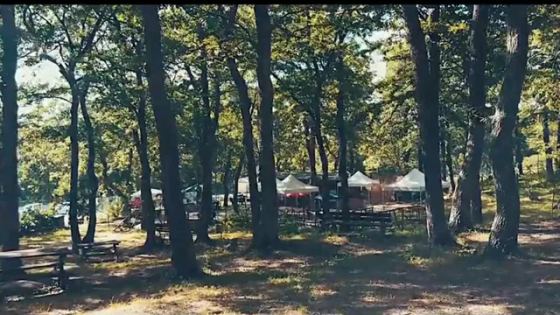
Parco Avventura Albano di Lucania
Albano di Lucania (PZ) · 10.7 km
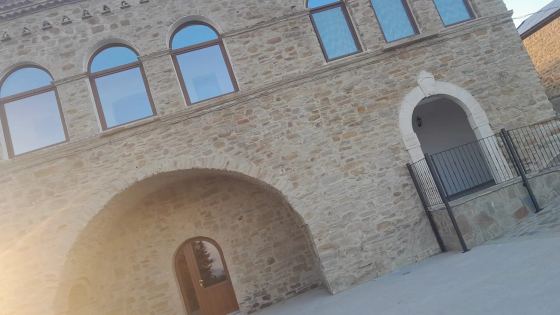
MASSERIA DEI ROSSI
Cirigliano (MT) · 25.3 km
Anthea Boutique
Potenza (PZ) · 26.1 km
Cargo Srl
Potenza (PZ) · 28 km
Paradiso Beauty Artists di Paradiso Maria
Potenza (PZ) · 29.4 km
Form Design
Gravina in Puglia (BA) · 34.2 km