
Ancient urban nucleus on a volcanic promontory overlooking the Gulf of Pozzuoli, partly evacuated in the 1980s and now partly recovered as a visitable site. It offers glimpses of layered archaeology and a landscape setting rare within the Campi Flegrei.
The tuff promontory on which the Rione Terra stands rises some thirty-eight metres above sea level, facing the port of Pozzuoli with a verticality that has always served a function before carrying a meaning. Here settled the Samian colonists of Dicearchia — whose name, "government of the just," was itself a political statement against the tyrant of Samos — and here, in 194 BC, Rome founded the colony of Puteoli, destined to become for centuries the principal trading port of the western Mediterranean. The name "Rione Terra," given in the early Middle Ages by the Byzantines, echoes a topographic term recurring across the Campanian landscape — the same used at Procida — and simply denotes raised solid ground, the defensible land facing the sea.
The stratification visible in the promontory is almost literal: beneath the seventeenth-century cathedral dedicated to San Procolo lie the remains of the temple of Augustus, built in the imperial age and later absorbed into the Christian building with a continuity of use that speaks volumes about how Mediterranean civilisations have always recycled the sacred. Even earlier, on the same axis, stood a shrine dedicated to Poseidon, and later to Eubone. The Capitolium of Puteoli, the warehouses, the paved streets of the Roman settlement: all of this remained buried beneath the following centuries, preserved, paradoxically, by neglect itself.
In 1970, following the first bradyseismic crises that had already marked the Phlegraean area in the preceding decade, the population of the Rione Terra was evacuated. The settlement — a fabric of historic buildings dating between the sixteenth and nineteenth centuries, built directly over the Roman structures — remained uninhabited for decades. It was a long, silencing abandonment, one that nonetheless prevented further alteration and allowed, from the 1990s onward, systematic excavation campaigns. The work has brought to light an underground imperial-age city, partly open to visitors: streets, workshops, production spaces forming a coherent network at a level below the promontory's present surface.
The context of the Campi Flegrei adds a variable that no other Italian site possesses to the same degree: the ground moves. Bradyseism — the slow rise and fall of the earth's crust in response to volcanic activity below — has shaped the physical history of Pozzuoli in a way that can be documented. The Serapeo, the celebrated Roman macellum visible in the town centre, bears on its pillars the marks of centuries of ground oscillation, with holes left by lithodome molluscs testifying to periods of submersion. The Rione Terra shares in the same dynamic: its current elevation is the result of millennia-long movements that continue still.
Today part of the underground site can be visited on guided routes leading along the Roman decumanus, between tuff walls and original pavements. The town above ground — the historic quarter with its weathered façades, narrow lanes, and cathedral under restoration — remains in a state of transition, neither fully returned to daily life nor definitively turned into a museum. It is this suspension, more than any single feature, that makes the Rione Terra difficult to classify — and, for that very reason, true to the complexity of the Phlegraean territory.
© Ra Boe / Wikipedia Create the proper attribution for your usage by clicking on this button! This file is licensed under the Creative Commons Attribution-Share Alike 3.0 Germany license.Attribution: Ra Boe / Wikipedia You are free: to share – to copy, distribute and transmit the work to remix – to adapt the work Under the following conditions: attribution – You must give appropriate credit, provide a link to the license, and indicate if changes were made. You may do so in any reasonable manner, but not in any way that suggests the licensor endorses you or your use. share alike – If you remix, transform, or build upon the material, you must distribute your contributions under the same or compatible license as the original.https://creativecommons.org/licenses/by-sa/3.0/de/deed.enCC BY-SA 3.0 deCreative Commons Attribution-Share Alike 3.0 detruetrue Internet: Titel Foto: Ra Boe / Wikipedia, Original; Lizenz: CC by-sa 3.0 Print: Titel Foto: Ra Boe / Wikipedia, Lizenz: CC by-sa 3.0 I have published this image as author Ra Boe under the "CC-BY-SA-3.0" in Wikipedia. This means that free, commercial usage outside of Wikipedia is permitted under the following licence terms: Online media: The author " RaBoe/Wikipedia " is named A weblink to the original image is provided: //commons.wikimedia.org/wiki/File:Rione_Terra_%E2%80%93_Pozzuoli_(2010)_by_RaBoe-20.jpg A copy of, or the Uniform Resource Identifier (https://creativecommons.org/licenses/by-sa/3.0/de/legalcode) for, this License with every copy Print media: The author " RaBoe/Wikipedia" is named A copy of, or the Uniform Resource Identifier (https://creativecommons.org/licenses/by-sa/3.0/de/legalcode) for, this License with every copy Please send me a specimen copy or the URL of the website where the image is used. Please write an email to raboe001-at-web.de, if you need the image in a higher resolution need my postal address for sending a specimen copy have further questions about the terms of the licence PS: In case of refusal of the above terms the author reserves the right to take legal action. This license and the rights granted hereunder will terminate automatically upon any breach by you of the terms of this license. In this case the author reserves to demand declaration to cease and desist, and compensation (according to the MFM fee references currently in force). Any of the above conditions can be waived if you get permission from the copyright holder. Foto selbst aufgenommen mit Nikon-D50: Objektiv Tamron 18 - 250 mmvon Wikipedia-User: Ra Boe This photo was taken with an Nikon-D50:, Objective Tamron 18 - 250 mm by Wikipedia user: Ra Boe · CC BY-SA 3.0 de — Wikimedia Commons
Certified Made in Italy businesses close to this place.

GIOIELLERIA GUERRIERO
Pozzuoli (NA) · 0 km
Tarallificio Filippone
Bagnoli (NA) · 3.6 km
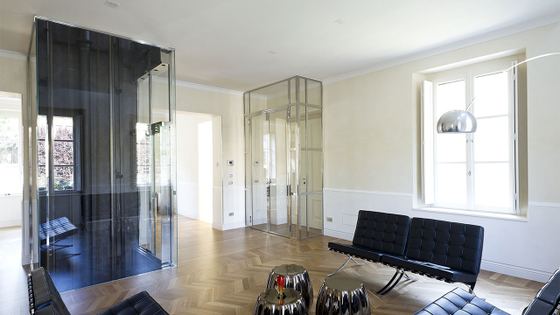
De Carlo Ascensori
Napoli (NA) · 5.3 km

Trasporti funebri Barca - Eccellente collaboratore da oltre 30 anni SERGIO TURAZZO
Monte di Procida (NA) · 6.4 km
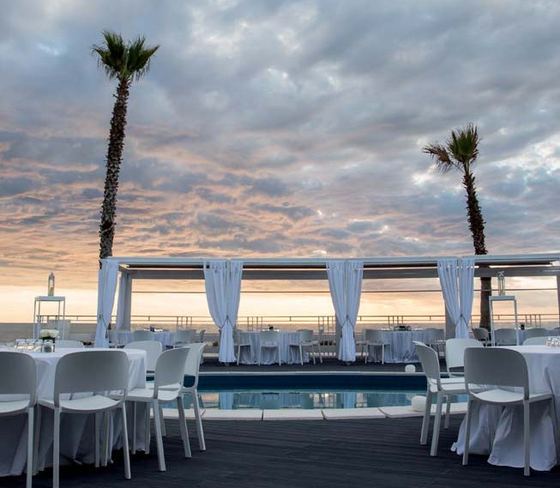
RISTORANTE PUNTA ROMANA
Bacoli (NA) · 6.4 km

Dott. Stefano Viglione Chirurgo Ortopedico
Napoli (NA) · 9.3 km
