
The Brembo river, as it runs through Val Brembana, offers stretches of rapids suited to activities such as rafting, hydrospeed and river tubing. A natural setting of fast water cut deep into the Bergamo Prealps, little known beyond a local public.
The Brembo rises on the slopes of Pizzo del Diavolo di Tenda, in the Orobie Alps, and runs for roughly 75 kilometres before joining the Adda on the plain. Along the stretch that crosses Val Brembana, amid the Bergamo Prealps, the river still retains the narrow, deeply cut valley-floor morphology in which the current accelerates around rocky spurs, forming sequences of rapids rarely matched at these Lombard latitudes. Torquato Tasso, in a sonnet written around 1570, already described the «terra bergamasca, che il Serio bagna e il Brembo innonda» (the land of Bergamo, bathed by the Serio and flooded by the Brembo): the river's impetuous reputation is thus an old one, and its hydrographic history is marked by episodes of violent flooding, the most recent of which dates to the 1987 flood.
Near San Giovanni Bianco, a municipality of around 4,800 inhabitants and one of the main centres of the middle Val Brembana, the shape of the valley floor creates the most favourable hydraulic conditions for whitewater descents. The morphology of the riverbed — with closely spaced drops, protruding boulders and lateral currents — produces stretches classifiable between grade two and grade three on the international difficulty scale, accessible to those approaching disciplines such as rafting, hydrospeed or river tubing for the first time. This is not a watercourse tamed for tourism: the hydroelectric diversions built between the 1920s and 1930s have reduced flow volumes compared with the past, but during snowmelt periods and after spring rainfall the Brembo regains a force that can be sensed clearly even from the bank.
The landscape accompanying the river along this stretch belongs to the Orobie Prealps, with wooded slopes dominated by conifers and broadleaf trees, and peaks closing the horizon to the north that rise above 2,000 metres. Vegetation reaches down to the banks, leaving few open spaces, and this gives the river corridor a visual compactness that isolates those on the water from the rest of the valley. For centuries, mills, sawmills and forges powered by the Brembo's hydraulic force operated along these banks; Leonardo da Vinci traced its course in a drawing datable to the sixteenth century. That layering of uses — for energy, industry, extraction — is now almost invisible, but it helps explain why the valley has remained relatively intact compared with other, more accessible and more altered Prealpine valley floors.
Compared with the established whitewater circuits of the Alps — the Noce in Val di Sole, the Dora Baltea in Valle d'Aosta — the Brembo at San Giovanni Bianco remains a local reference point, frequented mainly by those living within reach of Bergamo and the eastern Po plain. This relative marginality with respect to organised tourist flows is part of its nature: a river that has built its reputation on force, not on accessibility.
Alessandro Vecchi · CC BY-SA 4.0 — Wikimedia Commons
Certified Made in Italy businesses close to this place.

ESTETICA FUTURA
Petosino (BG) · 15.6 km
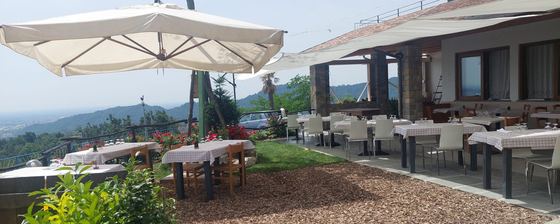
Agriturismo Del Battista
Palazzago (BG) · 17.3 km

IMPRESA EDILE SANA Srl
Brembate di Sopra (BG) · 17.5 km
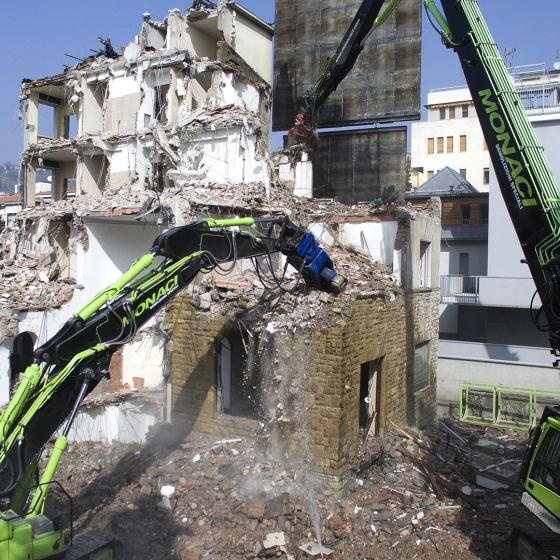
Monaci - Demolizioni Speciali
Brembate di Sopra (BG) · 18.3 km

Elettronic Car Service - di Consoli Stefano
Bergamo (BG) · 20 km

LGR – ROBERTO SPAGNOLO LABORATORIO GEMMOLOGICO STIME E PERIZIE
Bergamo (BG) · 20.3 km
