Before you go on
This site uses only what it needs to work: the language you choose, access to the members' area, and anonymous counts that tell us whether the search is answering well. For advertising campaigns we ask your permission, and without a yes nothing starts. See the full list.

A protected area embracing the Gallipoli Cognato forest and the Dolomiti Lucane, with some of the most extensive turkey oak woods in southern Italy and rock formations of rare beauty. A twofold landscape, between forest nature and alpine morphology, less visited than the nearby national parks.
Between the provinces of Matera and Potenza, the Parco Regionale di Gallipoli Cognato e Piccole Dolomiti Lucane (Gallipoli Cognato and Piccole Dolomiti Lucane Regional Park) spans roughly 27,000 hectares that bring together two distinct natures, almost irreconcilable at first sight. On one side, the Gallipoli Cognato forest, one of the most intact and continuous turkey oak woodlands in southern Italy, with centuries-old trees forming a closed canopy that alters the light and silence below. On the other, the Piccole Dolomiti Lucane (Small Lucanian Dolomites), a system of limestone pinnacles and ridges that rises abruptly above the villages of Pietrapertosa and Castelmezzano, with a verticality that contrasts with the softness of the woods, as if two different geographies had chosen to occupy the same space.
The turkey oak forest — Quercus cerris — forms the ecological core of the park. The turkey oak is a sturdy, long-lived tree suited to the clay soils of the Lucanian Apennines, and here it reaches a density and continuity rare in the forest landscape of southern Italy. Walking the trails that cross this forest means moving through an environment where the seasonal succession is legible in every detail: the cracked bark of the oldest specimens, the undergrowth that changes composition with altitude, the clearings where light returns suddenly. The park is home to the Apennine wolf, the roe deer and several species of birds of prey, whose presence signals a faunal balance that many more celebrated protected areas struggle to maintain.
The Piccole Dolomiti Lucane owe their name to the morphology of their rock formations, shaped by erosion on beds of flysch and conglomerate. The villages of Pietrapertosa, at about 1,088 metres above sea level, and Castelmezzano, slightly lower down, are literally set into the rock, with houses leaning against the cliff face or following its irregularities. This relationship between settlement and geological substrate is not ornamental: it is the result of centuries of adaptation to a land that offered no flat ground. The two villages are linked by a hiking trail known as the Sentiero delle Sette Pietre (Path of the Seven Stones), which runs along the ridge between the two main rock formations.
The park remains less visited than the national parks of Pollino and Appennino Lucano-Val d'Agri-Lagonegrese, which belong to the same region. This relative distance from the established circuits has preserved a quality of experience hard to find elsewhere: trails where meeting other hikers is rare, villages where the tourist season has not yet reshaped the local economy irreversibly. Basilicata, one of Italy's least densely populated regions, offers in this park one of its most layered landscapes — in the literal sense of geology and in the figurative sense of the human history deposited upon it.
Tiziana12 · CC BY 4.0 — Wikimedia Commons
Certified Made in Italy businesses close to this place.
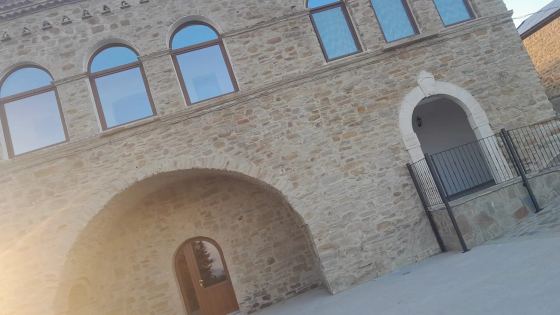
MASSERIA DEI ROSSI
Cirigliano (MT) · 11.5 km
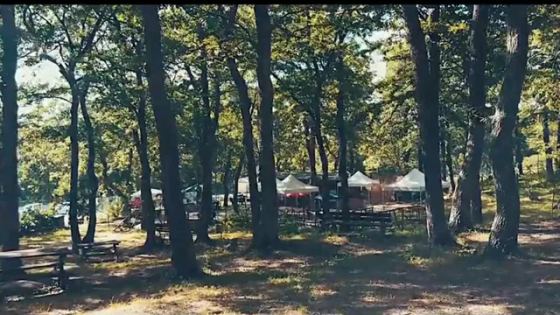
Parco Avventura Albano di Lucania
Albano di Lucania (PZ) · 18.8 km

Anthea Boutique
Potenza (PZ) · 31.1 km

Cargo Srl
Potenza (PZ) · 32.1 km

Paradiso Beauty Artists di Paradiso Maria
Potenza (PZ) · 33.1 km

Ristorante Pizzeria Bar Moliendocafè Di Luglio Simona
Moliterno (PZ) · 36.5 km