Before you go on
This site uses only what it needs to work: the language you choose, access to the members' area, and anonymous counts that tell us whether the search is answering well. For advertising campaigns we ask your permission, and without a yes nothing starts. See the full list.

In the village of Montappone, in the Fermano area, a small museum tells the story and working stages of the straw hat, the craft that made this corner of the Marche famous worldwide.
Montappone rises on a hill in the Fermano area, between the Valle del Tenna and the foothills of the Monti Sibillini, a mere few kilometres as the crow flies from the Adriatic. The oldest core of the village dates back to the year 1000, when a castrum was built here, later passing under the control of the Brunforte, a Ghibelline family among the most influential in the medieval Marche. Of that defensive structure, the layout of the town still remains, with its narrow streets and buildings pressed close against one another. But it is another story, more recent and more everyday, that defines Montappone's identity within the Italian landscape.
Starting in the 18th century, the working of wheat straw — a waste material from local agriculture — became a widespread activity among the families of the area. In the evenings, women would braid strips of straw into plaits, which were then sewn together to form hats. What began as the domestic reuse of an agricultural by-product grew over the decades into a genuine collective manufacturing vocation, eventually establishing one of the most significant hat-making districts in Europe. Even today, some companies in the town and neighbouring villages still operate in this sector, keeping alive a production cycle that combines artisanal work with industrial organisation.
The Museo del Cappello (Hat Museum), housed in Piazza Roma within the former town hall, gathers and orders this memory. Its institutional history began in 1991, with the establishment of the first exhibition nucleus, and it went through several relocations and rearrangements before returning to its original home. The museum's layout follows the stages of the craft in the order they once unfolded: from the gathering and selection of straw to braiding, from sewing to decoration, through to commercial distribution. Period photographs, hand tools, decommissioned machinery and product samples bring back the tangible reality of a craft that shaped generations of family and community life.
What the museum documents is not simply a technique, but a system of social and economic relationships built around a seemingly simple object. The straw hat of Montappone reached international markets, weathered changing fashions and crises, and adapted to shifts in taste and production. Following this trajectory through the objects preserved in Piazza Roma means reading, on a small scale, the story of how a rural territory in the Marche managed to build a distinct, recognisable and lasting productive identity.
Paulacastelli · CC BY-SA 4.0 — Wikimedia Commons
Certified Made in Italy businesses close to this place.
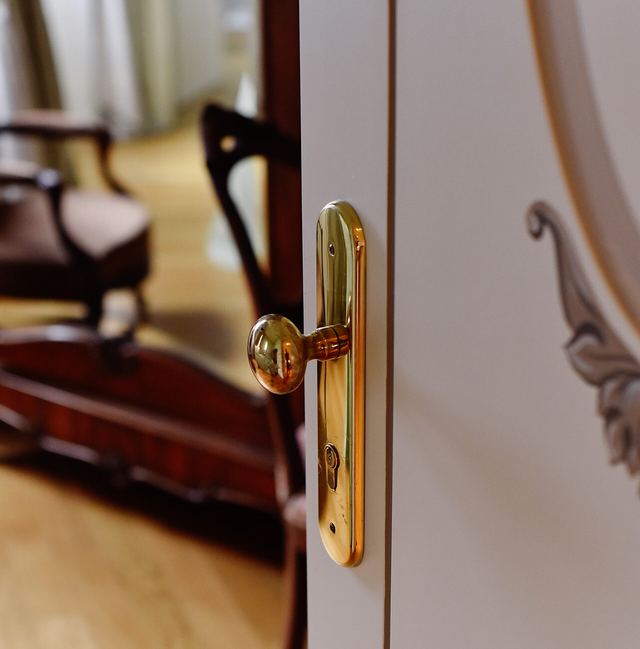
Palazzo Riccucci Resort
Montappone (FM) · 0.3 km
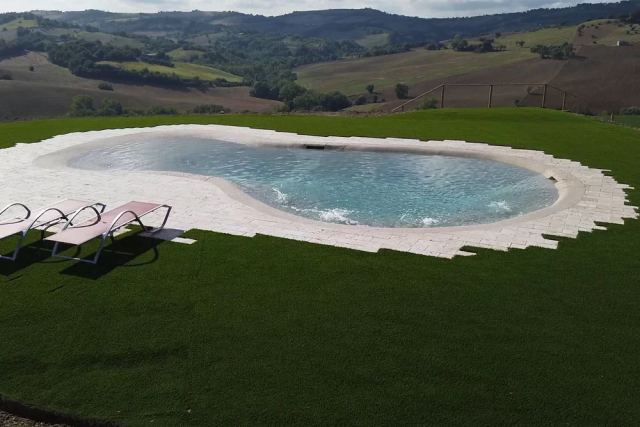
Villa Angela Country House
Fermo (FM) · 6.2 km

Fior di Pizza Pizzeria al Taglio
Colmurano (MC) · 8.4 km
Bar Centrale Gelateria Incicco
San Ginesio (MC) · 12.6 km

Vetreria Gorbini - Artigiani Professionisti del Vetro dal 1950
Corridonia (MC) · 14.4 km

Il Parco Di Snoopy Amici Per Sempre
Amandola (FM) · 20.2 km