A tree-worship rite of pagan origin in which a large tree is felled in the woods and dragged into town to be raised in the square, a symbol of fertility and renewal. One of the most ancient and spectacular traditions of Basilicata.
Every year, around Pentecost, the small municipality of Accettura — some 1,700 inhabitants in the heart of the province of Matera — becomes the setting for a rite that predates Christianity by centuries and yet has never ceased to be performed. The Maggio di Accettura is a tree-worship festival of pre-Christian origin, surviving in its essential structure to this day, and considered by ethnologists to be among the most intact examples of this type of ceremony still practised in Italy.
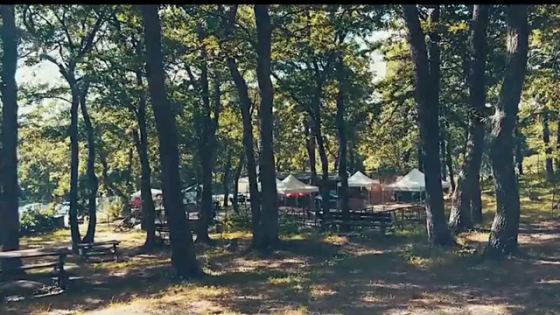
The rite begins in the Foresta di Gallipoli Cognato (Gallipoli Cognato Forest), a protected area within the Parco Regionale Gallipoli Cognato Piccole Dolomiti Lucane (Gallipoli Cognato and Piccole Dolomiti Lucane Regional Park), where a large Turkey oak is selected and felled — the Maggio itself. The tree, which can stand over twenty metres tall, is then dragged down to the valley by a team of oxen along steep paths, a descent that takes days and draws in the whole community. Separately, a holly top known as the Cima is taken from the nearby woods, destined to be grafted onto the crown of the oak once it is raised in the square. The union of the two elements — the trunk and the crown — forms the symbolic core of the entire celebration: an allegory of the meeting between the masculine and the feminine, between earth and sky, between the cycle that dies and the one that is renewed.
The raising of the Maggio in the square is the culminating moment. The stripped trunk is hoisted upright with ropes and collective effort, reaching heights of up to thirty metres, and the Cima is fixed at its top. Dances, songs and competitions unfold around the standing tree. The festival lasts several days and is interwoven with devotion to San Giuliano, the town's patron saint, in that overlap between liturgical and agrarian calendars that characterises many festivals of the deep South.
Similar events, though less documented, take place in other towns of Basilicata — Pietrapertosa, Oppido Lucano, Garaguso — confirming that the tree rite was once widespread across a broader territory. In Accettura, however, continuity and popular participation have preserved a formal coherence that has been partly lost elsewhere. This is neither a folkloric reconstruction nor a re-enactment: the community does not stage the rite, it performs it.
What sets the Maggio di Accettura apart from many other Italian traditional festivals is precisely this still-perceptible quality of necessity. The real exertion of the dragging, the choice of the tree in the woods, the slowness of the journey toward the town: every phase retains an inner logic that is not merely ornamental. The rite carries with it the physical weight of matter — wood, earth, ropes, animals — and it is in this weight that its endurance through time resides.
Gianfranco Spazioso · CC BY-SA 3.0 — Wikimedia Commons
Certified Made in Italy businesses close to this place.