Hilltop town in the province of Pescara known for high-quality extra virgin olive oil and a deep-rooted ceramics tradition, set among vineyards and olive groves beneath a medieval castle.
Loreto Aprutino stands on a hill in the province of Pescara, southwest of the Adriatic capital, in that inland belt of Abruzzo where the landscape is marked by rows of olive trees and vineyards following the contours of the land. The town has around 7,500 inhabitants — known as Loretesi — and grows around the medieval castle and the Chiesa di San Pietro (Church of San Pietro), which look down over the valley below. This is not a place that imposes itself through monumentality, but through a quiet coherence between urban form and agricultural land that is rarely found so intact.
The territory's olive-growing vocation is ancient and unmistakable. Together with the towns of Moscufo and Pianella, Loreto Aprutino forms what is locally known as the "triangolo d'oro dell'olio" (golden triangle of oil), a name that reflects the concentration of olive groves and the quality of production in this part of the Pescara area. The varieties grown belong to Abruzzo's tradition, and the resulting extra virgin olive oil falls under the DOP Aprutino Pescarese, a standard that protects the organoleptic qualities tied to the hilly soil and microclimate of the area. The harvest, still largely carried out using traditional methods, takes place in autumn, when the town takes on a different pace — slower and more focused.
Alongside olive oil, the territory produces wine that helps define the area's food and wine identity. Vineyards alternate with olive groves across the surrounding countryside, and local cuisine reflects this double agricultural root in dishes that favour raw ingredients over technical complexity.
Less known outside the region, but deeply rooted in the town's history, is its ceramics tradition. Loreto Aprutino has, over time, kept alive an artisan production distinguished by geometric and floral decorations tied to a local figurative repertoire. Loretese ceramics are neither a recent phenomenon nor a revival: they are rooted in a craft practice that has accompanied the town's daily life for centuries, and that still survives today in a handful of workshops in the historic centre. The link between ceramics and food culture is not merely symbolic: traditional pieces include containers and tableware that were once an integral part of preserving and consuming food, from oil to olives in brine.
The historic centre retains a compact urban fabric, with stone alleys and noble palazzi that recall the role the town played in the region's agricultural economy between the Middle Ages and the early modern period. The Chiesa di Santa Maria in Piano (Church of Santa Maria in Piano), located just outside the built-up area, houses a cycle of medieval frescoes of considerable interest. Loreto Aprutino remains a place where the quality of agricultural production and the continuity of artisan traditions can still be read in the landscape and in the ordinary life of the town, with no need for staging.
Certified Made in Italy businesses close to this place.
mediaplus
Chieti (CH) · 15.2 km
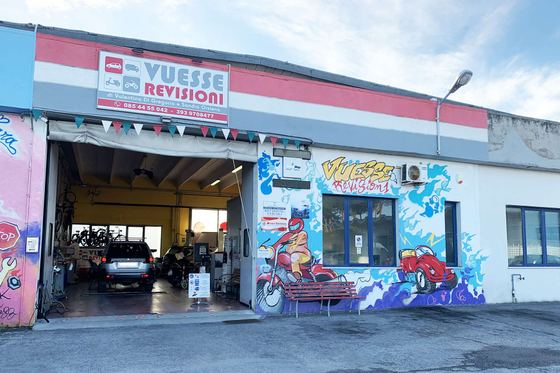
VUESSE REVISIONI
Montesilvano (PE) · 16.1 km
ONORANZE FUNEBRI IEZZI
Atri (TE) · 16.2 km

FERI Calzature & Accessori
Pescara (PE) · 18.9 km
PIZZ'ARDENTE
Pineto (TE) · 20.9 km
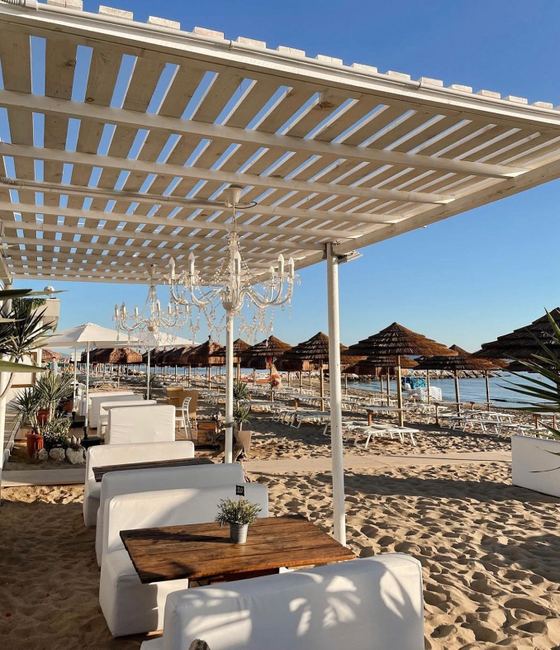
LIDO BIANCO BEACH CLUB
Francavilla Al Mare (CH) · 22.7 km
