Before you go on
This site uses only what it needs to work: the language you choose, access to the members' area, and anonymous counts that tell us whether the search is answering well. For advertising campaigns we ask your permission, and without a yes nothing starts. See the full list.
Cereal varieties grown in Sicily since the third millennium BC, now being revived by small farmers who keep alive forgotten cultivars such as Tumminia, Russello and Perciasacchi. They represent a niche agro-cultural heritage closely tied to the island's territorial identity.
Sicily carries a layered memory in the very name of its wheat. Findings at the Neolithic village of Stentinello, near Siracusa, attest to the presence of grinding tools as early as the third millennium BC: millstones and pestles that speak of a relationship with cereal grain predating any written record. From that prehistoric threshold, the island built its agricultural identity around wheat, becoming for centuries the principal supplier of grain to the Mediterranean basin. Myth itself recorded this centrality: the abduction of Persephone at Enna, daughter of Ceres, ends with the gift of grain to humankind, as if oral tradition had wanted to fix in a sacred narrative what the land had already been practising for generations.
The cultivars now defined as "ancient Sicilian grains" are the wheat varieties grown on the island before the introduction of seeds selected through modern hybridisation techniques, a process that took place over the course of the twentieth century. Among the best documented are Tumminia, Russello and Perciasacchi. Tumminia — also known as Timilia — is a short-cycle durum wheat, suited to the arid climates of the inland areas; it is the raw material of the black bread of Castelvetrano (a dark-crumbed, thick-crusted bread), a product recognised as a Slow Food Presidium. Perciasacchi, whose dialect name evokes the ears' ability to pierce sacks with their own awns, has a gluten content structurally different from that of modern wheat, with a less tenacious protein network. Russello, meanwhile, is a soft wheat with reddish ears, once widespread in the provinces of Enna and Caltanissetta, now being revived by a network of small organic farmers.
What sets these varieties apart is not only their botanical genealogy, but the relationship they have developed with the land over centuries of natural selection. Adapted to the clay soils and drought conditions typical of inland Sicily, they grow without requiring chemical fertilisers or pesticide treatments, making them compatible with organic farming practices for structural reasons rather than ideological choice. This agronomic resilience allowed them to survive even in the decades when European agricultural policies pushed towards varietal standardisation, thanks to the quiet stewardship of farming families who saved the seed year after year.
The contemporary revival of these grains gained momentum from the 2000s onward, intertwining with the spread of stone milling. Mills such as that of the Ferrara brothers, who use millstones of Ferté stone (a French variety known for its hardness and low tendency to flake), have brought back into circulation wholemeal and semi-wholemeal flours that retain the germ and outer layers of the grain. Stone milling at controlled speed limits the overheating of the raw material, preserving heat-sensitive compounds. The result is a flour with a nutritional and sensory profile different from that of modern wheat flours milled with steel rollers.
Around these grains a short supply chain has been rebuilt, involving inland Sicily: the cereal-growing areas of the provinces of Palermo, Agrigento, Enna and Trapani, where the agricultural landscape still retains an open character, with fields changing colour through the wheat seasons. In spring, the ears of Russello take on tones visibly different from those of Tumminia, and this chromatic variety in the landscape is itself a form of living documentation of cereal biodiversity. Artisan bakeries in the interior, often family-run, complete the chain, turning the flour into naturally long-leavened breads that carry a trace of the land where the grain grew.
Certified Made in Italy businesses close to this place.
NINO U' BALLERINO
Palermo (PA) · 0.9 km
OSTERIA PANE E ALIVI - CHEF TOMMASO SIRAGUSA
Palermo (PA) · 0.9 km
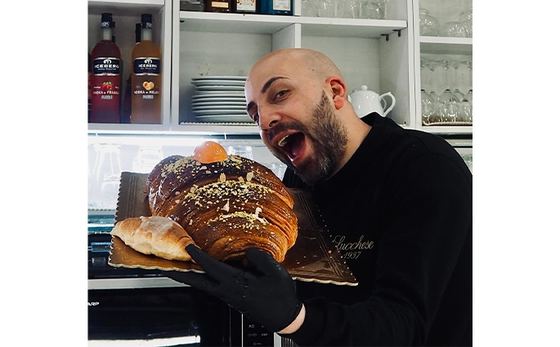
''Gelateria Lucchese'' Miglior Gelatiere Anno 2026 Domenico Lucchese
Palermo (PA) · 1.2 km
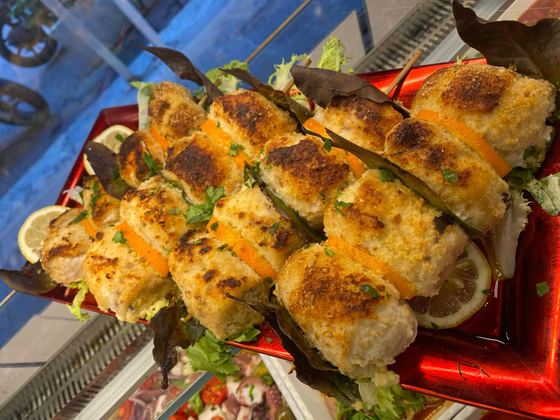
Pescheria Viola Francesco
PALERMO (PA) · 1.8 km
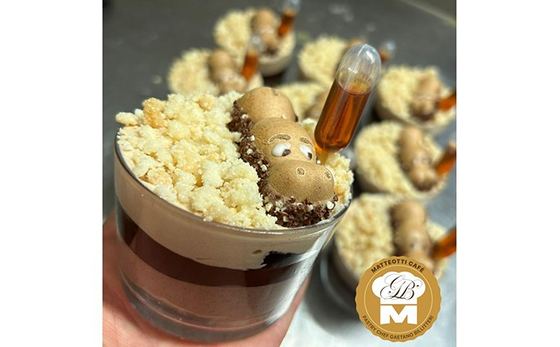
MATTEOTTI CAFE' VEGANFOOD DI BILLITTERI GAETANO
Palermo (PA) · 3.4 km
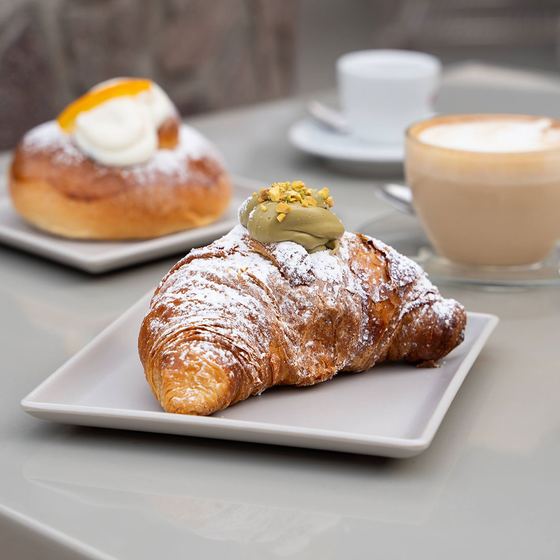
Garden Bar
Palermo (PA) · 5.5 km