Before you go on
This site uses only what it needs to work: the language you choose, access to the members' area, and anonymous counts that tell us whether the search is answering well. For advertising campaigns we ask your permission, and without a yes nothing starts. See the full list.

A medieval village in the Marche considered among the best preserved in the region, with intact perimeter walls and an urban layout that tells centuries of local history.
In the hinterland of the province of Ancona, some twenty kilometres from the Adriatic Sea, Corinaldo occupies a hilltop ridge with the geometric precision of a place that had to defend itself for a long time. The walls that encircle it — nearly a kilometre in perimeter, in red brick, with towers and bastions still passable on foot — are not a relic to be admired from a distance: they are the load-bearing structure of the village, the boundary between the built fabric and the Marche landscape that slopes down toward the valleys of the Cesano and the Misa.
The walls, in their present form, date to the fifteenth century, when Corinaldo was contested between local lordships and regional powers. Their state of preservation is not the result of recent restoration but of a continuity of use that has crossed the centuries without decisive interruption. It is still possible to walk almost their entire length, and from the walkway one grasps the military logic that shaped the historic centre: narrow lanes, carefully proportioned squares, buildings pressed against the walls as if to form a single compact organism. La Piaggia — the staircase descending toward the central well, one of the village's most recognisable features (a monumental stepped street) — is not an ornament but a hydraulic and social device, a gathering point and a site of daily life for generations of inhabitants.
Corinaldo's cultural profile also carries a religious dimension of considerable weight. The village is the birthplace of Maria Goretti, canonised by Pius XII in 1950 and since become a figure of popular devotion reaching well beyond the region's borders. Her presence in local collective memory is woven into the town's civic history in a way that is not purely hagiographic: here, sainthood is also a biographical fact rooted in a specific setting — the Marche countryside at the close of the nineteenth century.
The urban fabric preserves a picture gallery with works from the local school, a historic theatre, and the remains of a defensive system that the townspeople have always called, with a certain irony, the legacy of the "Matti di Corinaldo" (the "Madmen of Corinaldo") — an epithet popular tradition attributes to the inhabitants because of legendary episodes tied to the village's history. Four kilometres from the centre, the Antico Molino Patregnani (Old Patregnani Mill), documented as far back as the thirteenth century and open to visitors since 2013, adds a productive, rural dimension to a story that might otherwise risk staying confined within the walls.
Corinaldo appears on the list of Italy's Most Beautiful Villages, a recognition that certifies its morphological integrity without exhausting its meaning. What sets this village apart from other minor centres in the Marche is the coherence between physical form and the history that form has generated: the walls are not scenery — they are argument.
Accurimbono · CC BY-SA 4.0 — Wikimedia Commons
Certified Made in Italy businesses close to this place.

Fisiolab Di Vitali Francesca
Corinaldo (AN) · 1.8 km
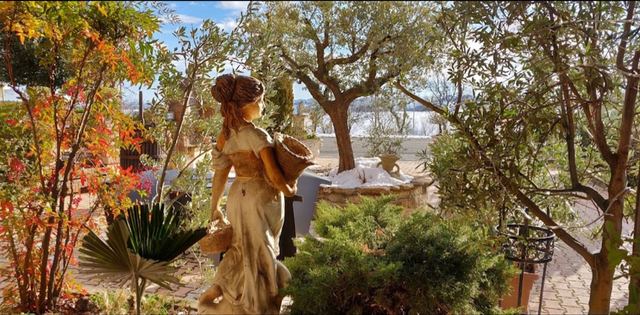
Ristorante Piccolo Ranch
Arcevia (AN) · 13.5 km
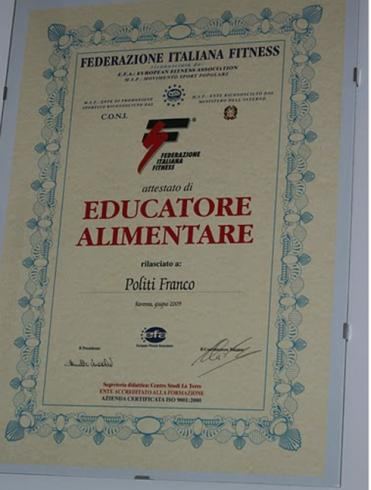
PALESTRA IRON MAN
Senigallia (AN) · 14.6 km
GELATERIA ARTIGIANALE GIUSTI
Castelplanio (AN) · 17.4 km
MAGRABO' - Hand Made In Italy
Fano (PU) · 18.7 km

Sakura Beauty&Spa
Fano (PU) · 19.4 km