
Founded by Julius Caesar as Forum Iulii, Cividale later became the Lombard capital of Friuli and preserves extraordinary architectural testimonies of that era, among the most significant in Europe.
The very name of the region conceals its origin: Forum Iulii, the city founded by Julius Caesar as a Roman outpost along the road leading toward the eastern territories of the empire. From that Latin name came, through gradual contraction, the name Friuli, and the city that was its seed — today Cividale del Friuli, in the province of Udine — still carries in its architectural strata the memory of every civilisation that settled there over nearly two thousand years.
It was under the Lombards, however, that Cividale rose to a leading role in European history. Following the descent into Italy in 568, the Germanic people led by Alboin chose this place as the seat of the first Lombard duchy on the peninsula. For over six centuries the city remained a centre of power and culture, later becoming the seat of the Patriarchate of Friuli until 1238. That era has left material testimonies of rare substance: the Tempietto Longobardo (Lombard Chapel), set into the rock overlooking the Natisone river, is an 8th-century oratory with stuccoes and frescoes belonging to a figurative tradition whose origins remain in part mysterious. In the Museo Cristiano (Christian Museum) of the Cattedrale di Santa Maria Assunta (Cathedral of Santa Maria Assunta) are preserved the Altare di Ratchis (Altar of Ratchis), carved around 740 at the behest of the Lombard king of the same name, and the Battistero di Callisto (Baptistery of Callixtus), both among the most significant works of early medieval art in Italy. Together, these sites led in 2011 to UNESCO recognition as part of the serial listing “Longobardi in Italia. I luoghi del potere” (Lombards in Italy: Places of Power).
The urban fabric tells of successive layers with the same discretion with which the stones overlap one another. The Ponte del Diavolo (Devil's Bridge), which crosses the Natisone with its asymmetrical arches, dates in its current form to the 15th century, rebuilt after the destruction of 1331 and again after that of 1917 during the First World War. Beneath it, the river runs between walls of limestone rock in a landscape that owes little to the Friulian plain and much to a miniature alpine gorge. The historic centre preserves the Roman layout, with the Museo Archeologico Nazionale (National Archaeological Museum) occupying the Palazzo dei Provveditori Veneti and housing artefacts spanning the chronological arc from the Bronze Age to the Lombard period.
Cividale lies about thirty kilometres from the Slovenian border, on the eastern edge of the Colli del Friuli (Friuli Hills), at the point where the plain gives way to the Valli del Natisone (Natisone Valleys). This frontier position has shaped its history as much as its geography: a crossroads of peoples, languages and influences, the city has absorbed and settled without ever losing a recognisable identity of its own. That identity can still be read today in the local dialect, in the place names, in a cuisine that blends Friulian traditions with Slavic influences, and in a civic life that maintains a human scale — just over eleven thousand inhabitants — capable of keeping alive a daily relationship with a heritage that elsewhere might risk becoming mere scenery.
Aconcagua (talk) · CC BY-SA 3.0 — Wikimedia Commons
Certified Made in Italy businesses close to this place.
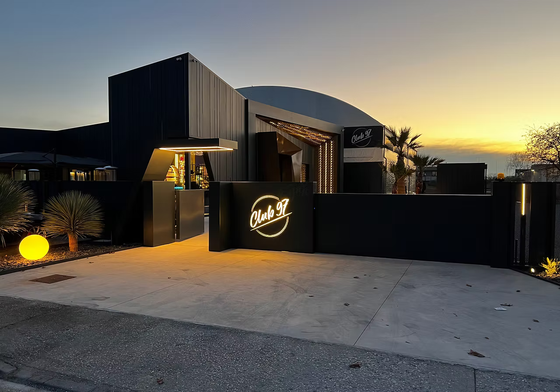
CLUB 97
Buttrio (UD) · 11.3 km

1859
Udine (UD) · 15.8 km
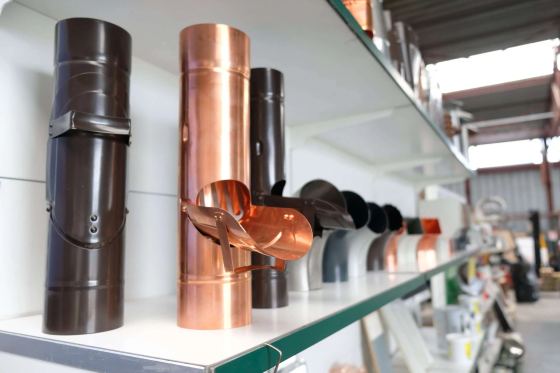
Degano Primo
Tavagnacco (UD) · 16.9 km
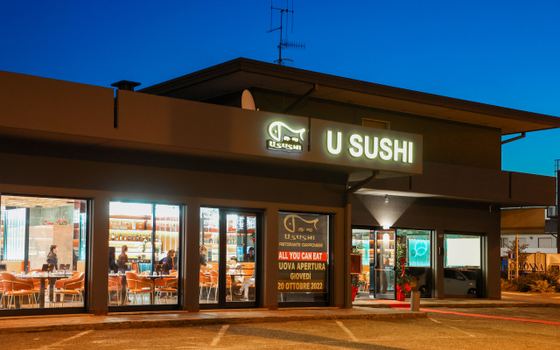
U SUSHI GORIZIA
Gorizia (GO) · 21.3 km
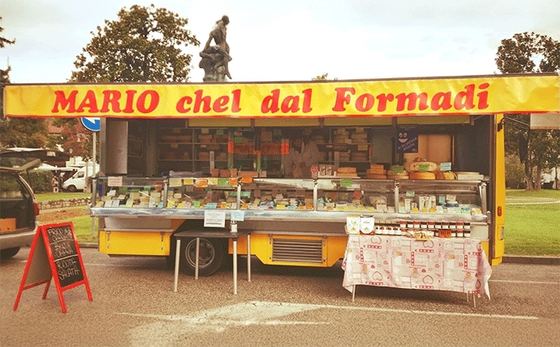
''MARIO CHEL DAL FORMADI'' DI BERTOSSI LUCIA - Cassacco - Ambulante di Formaggi e Latticini
Cassacco (UD) · 23.4 km
AGRITURISMO AL CJAR
Lestizza (UD) · 25.8 km
