
A medieval village wedged into the Dolomiti Lucane, with houses clinging to the rock and alleys that seem carved from stone. Ranked among Italy's most beautiful villages, it remains far removed from mass tourism.
Castelmezzano sits at 924 metres above sea level, in the heart of Basilicata, wedged between the sandstone pinnacles of the Dolomiti Lucane (Lucanian Dolomites) — a name that points not to a superficial resemblance but to a genuinely kindred morphology: rock towers, sheer walls, deep canyons that mark the territory of the Parco Regionale Gallipoli Cognato Piccole Dolomiti Lucane (regional park). The village has just over eight hundred inhabitants and belongs to the province of Potenza. Its position is no accident: the earliest settlements date to the Norman period, when the rock itself offered natural protection against raids.
The medieval layout has remained largely intact. The houses do not simply lean against the rock face: in many cases they are an extension of it, built from the same stone, on the same inclined plane, following a logic of construction that draws no clear line between architecture and geology. The alleys climb through steps cut directly into the rock, narrowing, forking, opening onto sudden terraces. This connective fabric — stairways, covered passages, low arches — is the result of centuries of collective adaptation to a territory that offered no flat ground.
The mother church, dedicated to Santa Maria dell'Olmo, stands in the oldest part of the village. Not far off, the remains of the Norman castle occupy a rocky spur overlooking the Basento valley. Only partial traces of the original structure survive, yet they are enough to convey the scale of the defensive complex that gave the village its strategic role in the system controlling Lucanian territory during the Middle Ages.
Castelmezzano is twinned with Pietrapertosa, a village of similar origin that rises on another cluster of pinnacles a few kilometres away. The two centres are linked by hiking trails that cross the rock formation, and in summer by a cable system — the so-called Volo dell'Angelo (Angel's Flight) — that lets visitors cross the valley suspended on a steel line. This infrastructure, recent as it is, has not altered the character of the place: the landscape between the two villages remains wild, dominated by untamed vegetation and rock.
The village belongs to the network of Borghi più Belli d'Italia (Italy's Most Beautiful Villages). Its distance from major roads — the provincial road leading to it is narrow and winding — has helped shield it from heavy tourist pressure, preserving a balance between the presence of visitors and the continuity of local life. Castelmezzano is not a museum village: the houses are lived in, the seasons still set the pace of the place, and the stone that holds it up is the same stone it was born from.
Paolo Santarsiero · CC BY-SA 4.0 — Wikimedia Commons
Certified Made in Italy businesses close to this place.
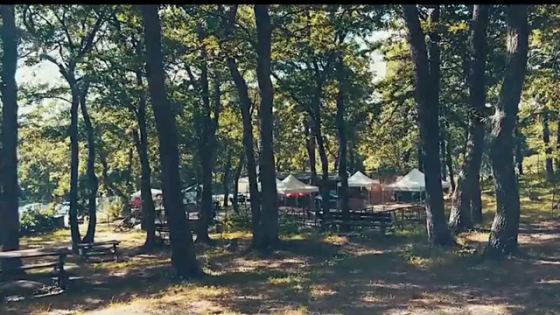
Parco Avventura Albano di Lucania
Albano di Lucania (PZ) · 11.7 km
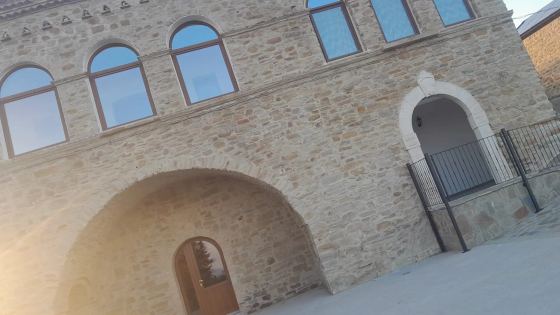
MASSERIA DEI ROSSI
Cirigliano (MT) · 18.5 km

Cargo Srl
Potenza (PZ) · 22.8 km
TARALLIFICIO FA.MA.
Tito (PZ) · 30.9 km
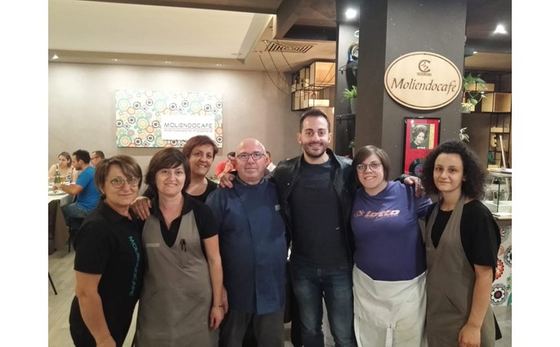
Ristorante Pizzeria Bar Moliendocafè Di Luglio Simona
Moliterno (PZ) · 35.1 km
