Before you go on
This site uses only what it needs to work: the language you choose, access to the members' area, and anonymous counts that tell us whether the search is answering well. For advertising campaigns we ask your permission, and without a yes nothing starts. See the full list.

The Romanesque Basilica di San Simplicio, in the heart of Olbia, is one of Sardinia's oldest places of worship and holds early Christian artefacts of great value. Often overlooked by visitors passing through on their way to the Costa Smeralda, it is a fitting starting point for exploring the pre-Roman and Roman history of Gallura.
Olbia is, in common perception, a port of transit — the point from which one departs for somewhere else. Yet in its historic centre, along the street named after the saint to whom it is dedicated, stands one of the most significant medieval buildings in northern Sardinia: the Basilica di San Simplicio, built between the 11th and 12th centuries in local granite, with the constructive sobriety that defines Sardinian Romanesque architecture at its most coherent.
The church is dedicated to Simplicio, held to be the first bishop of Olbia and a martyr under the emperor Diocletian, today patron saint of the diocese of Tempio-Ampurias and of the city itself. Its institutional history spans nearly a millennium: a cathedral until 1839, then downgraded to a parish church in 1955, it was granted the title of minor basilica by John Paul II in 1993. But it is the material history of the building that reveals the true measure of its complexity. Archaeological surveys conducted using stratigraphic methods have identified five distinct construction phases — not three, as previously believed — documenting a gradual transformation: from the original three-nave layout with a timber roof and four pairs of arches, to the introduction of barrel vaults in the side aisles, to the raising of the roof, to the lengthening of the nave with the relocation of the façade, up to the addition of a bell tower that brought the front to its current position. Each phase can be read in the stone, for those who know where to look.
The interior preserves early Christian inscriptions and sarcophagi that attest to the Christianisation of the Olbia area dating back to the first centuries of the common era, in a territory that already bears the marks of far older layers of history: Nuragic, Punic, Roman. Gallura is not a region of simple history, and San Simplicio gathers some of its oldest traces in built form. The grey granite of the walls, the light entering in measured amounts through the narrow openings, the proportions of the naves: everything points to an idea of sacred space that seeks not effect but endurance.
What is striking, watching the tourist flows that cross Olbia every summer on their way to the Costa Smeralda, is the gap between the historical weight of this building and the attention it receives. It is not a question of accessibility: the basilica stands in the heart of the city, within walking distance of the station and the port. It is, rather, a matter of attention — or of haste. Those who stop find a monument that needs no external staging to justify a visit.
Clemensfranz · CC BY-SA 4.0 — Wikimedia Commons
Certified Made in Italy businesses close to this place.

Dm Style Prima Classe Parrucchieri e Estetica
Sassari (SS) · 0.3 km
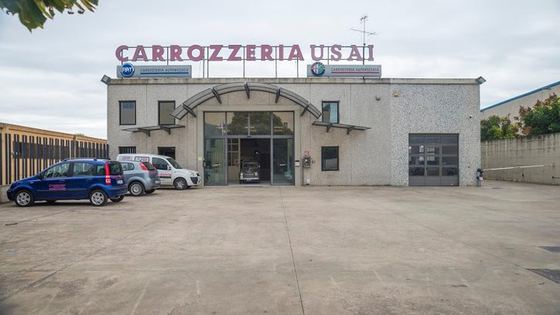
Carrozzeria Andrea Usai
Sassari (SS) · 2.6 km
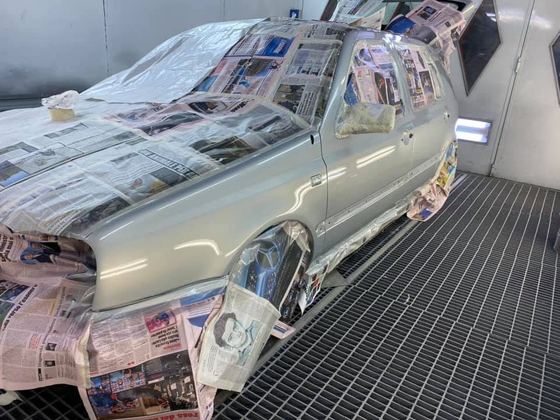
Carrozzeria Expert Sassari di Daniel Cocco
Sassari (SS) · 3.5 km

Melis Servizi
Sassari (SS) · 17.2 km
Atelier di Luca
Porto Torres (SS) · 18 km
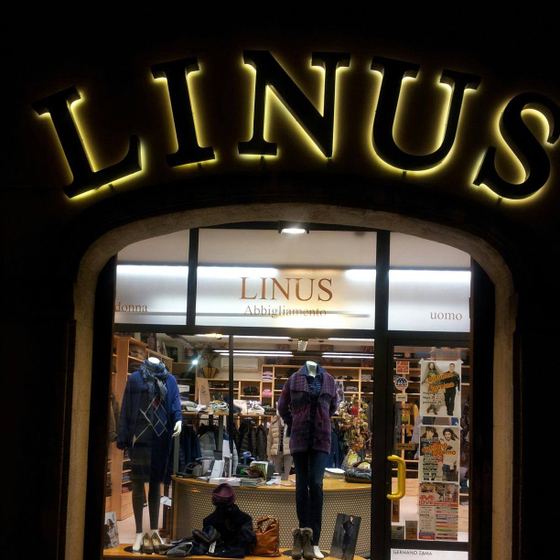
Linus Abbigliamento
Thiesi (SS) · 25.5 km